
Last updated November 16, 2026
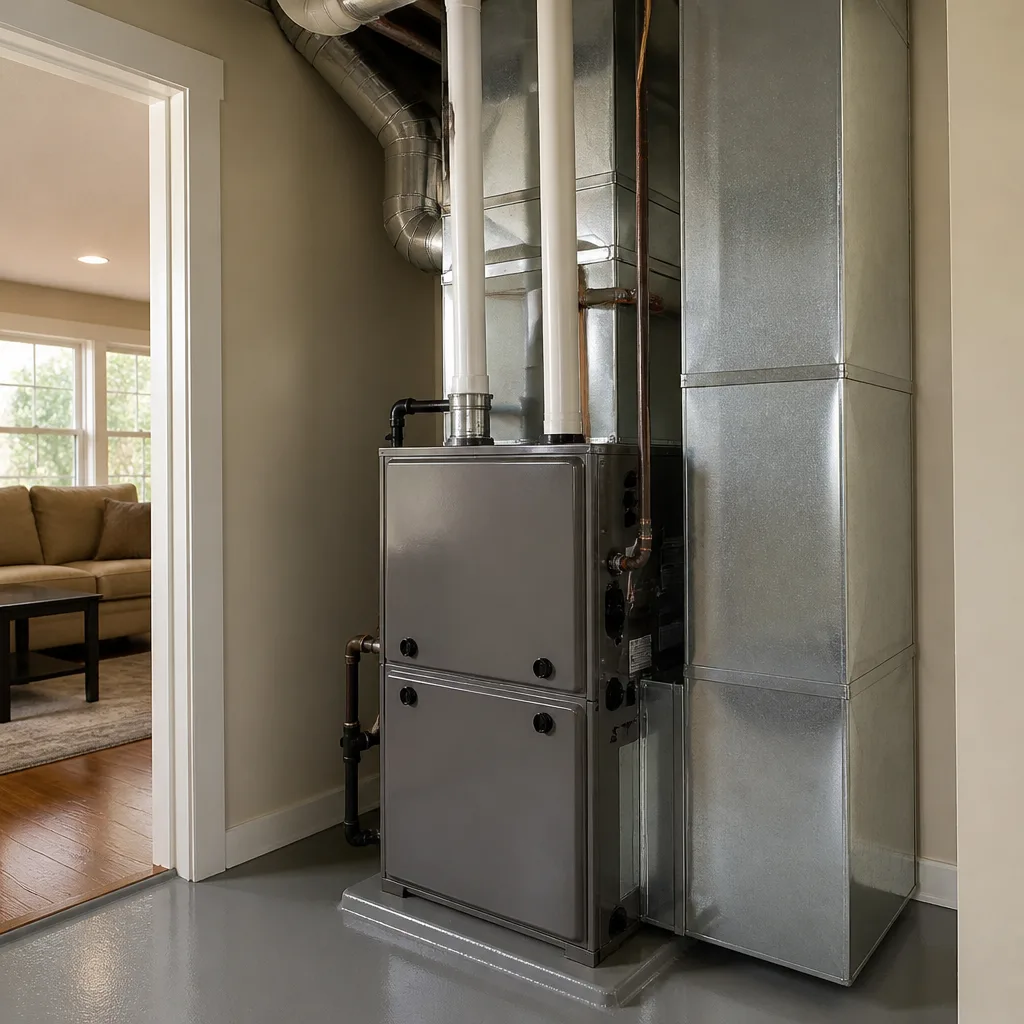 Furnace & heating
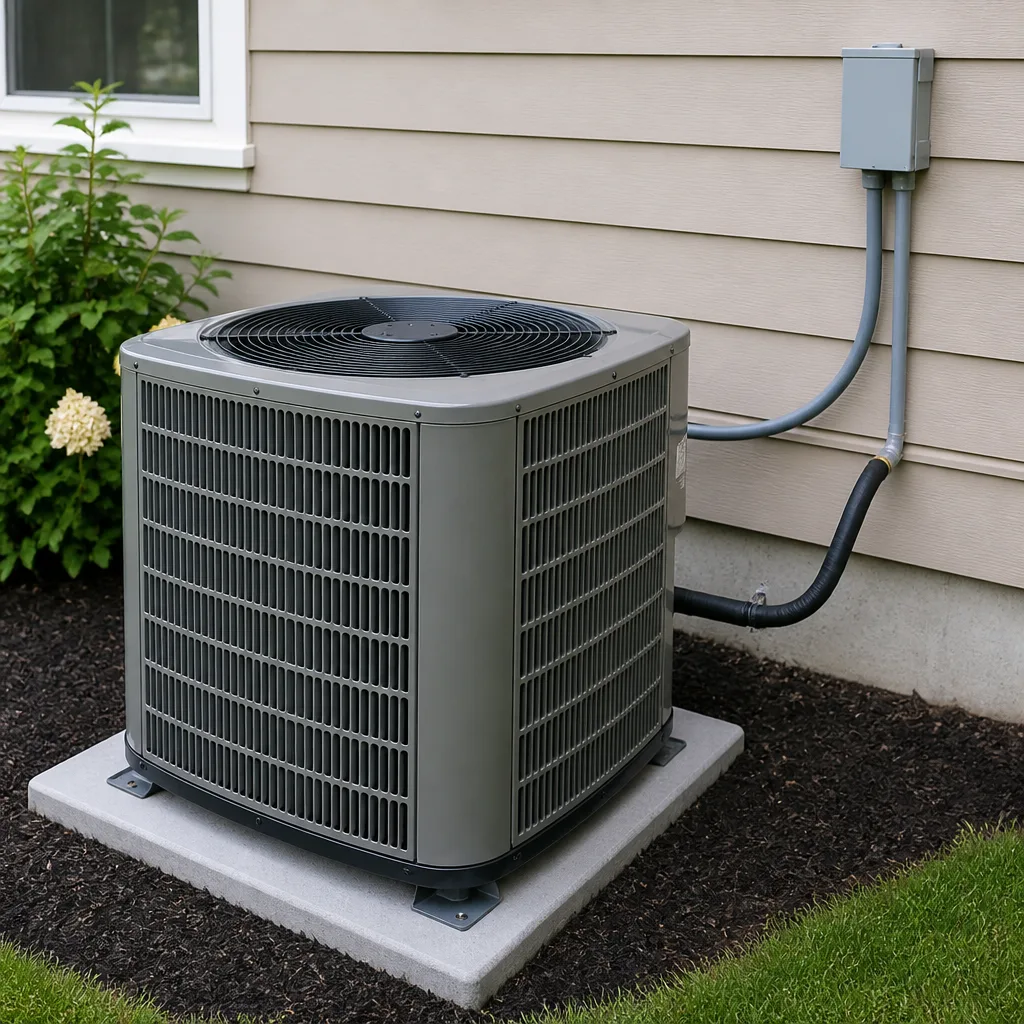 AC repair
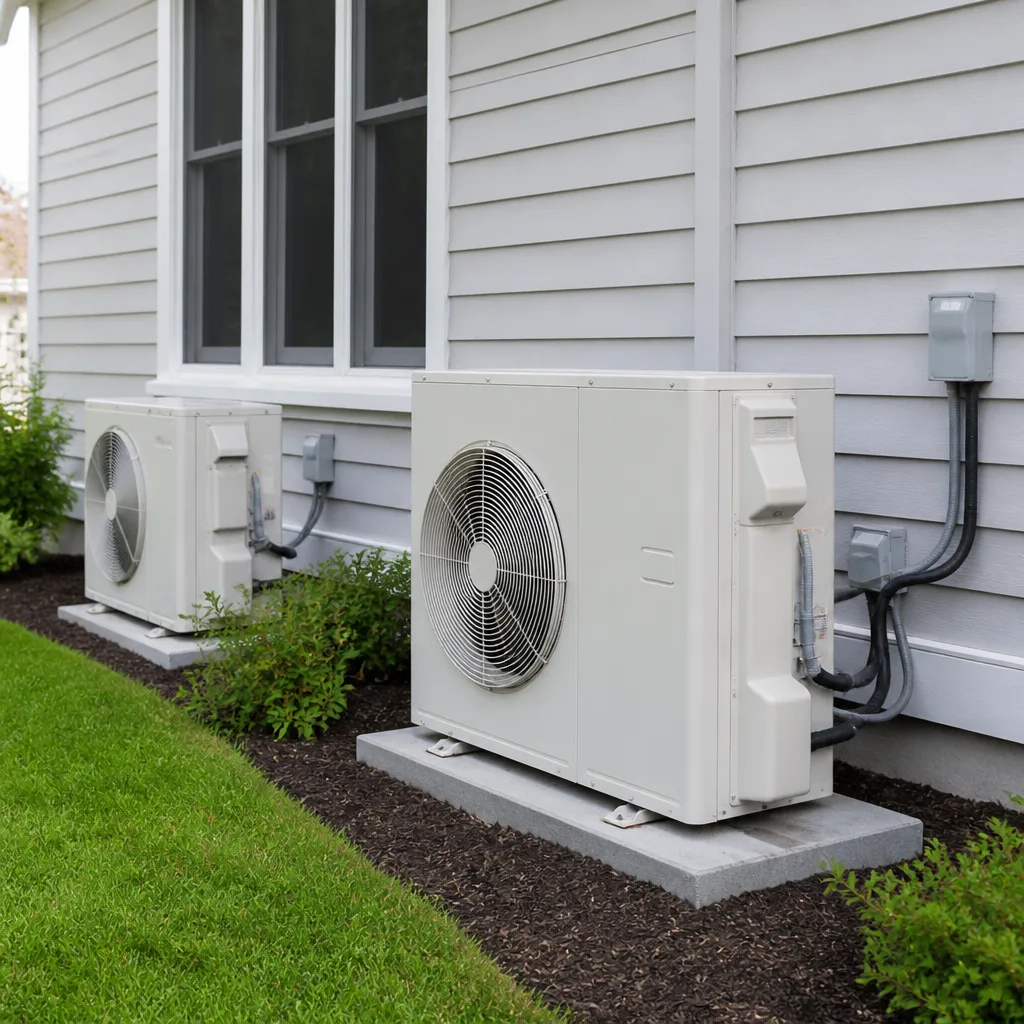 Heat pumps
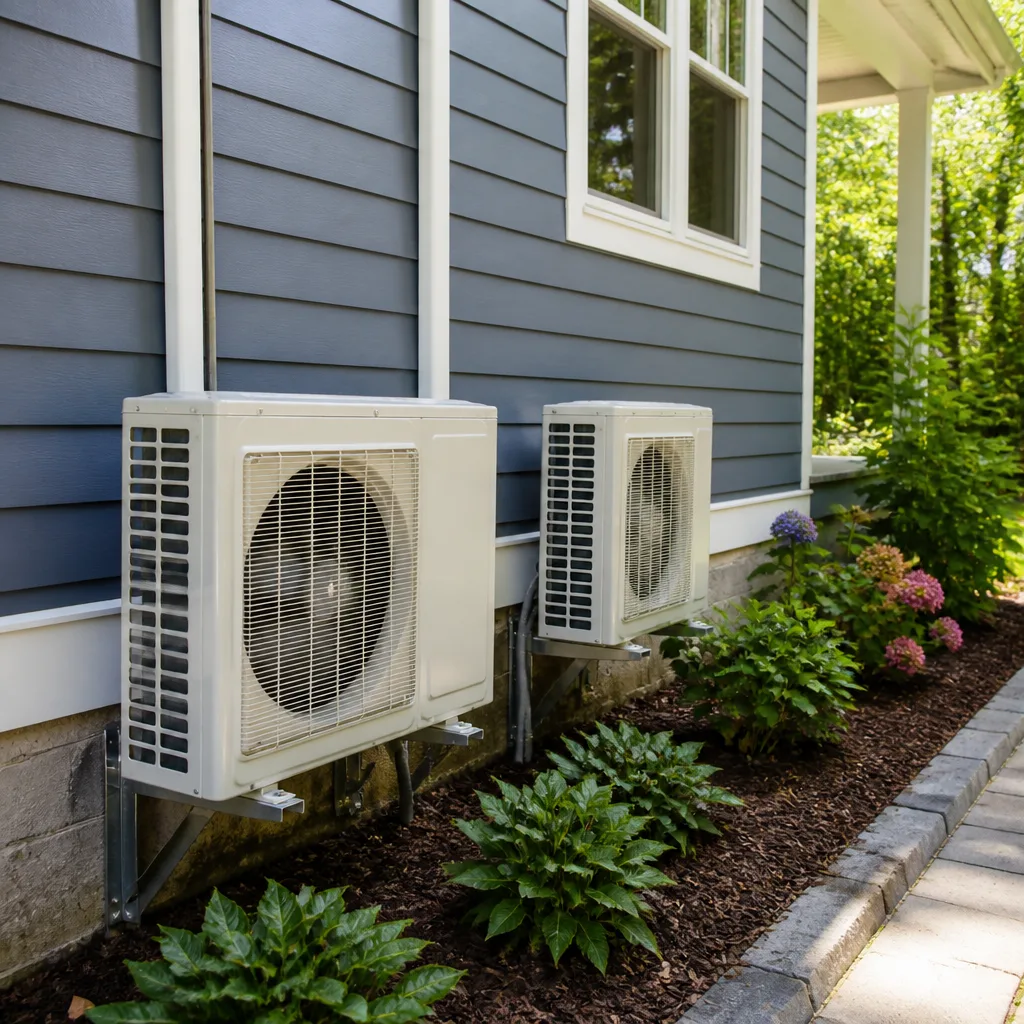 Ductless mini splits
 Carrier
 Trane
 Goodman
Seasonal tune-up and full diagnostic on your Carrier, Trane, or Goodman system - readings shown to you before any repair is proposed
Diagnosis first, numbers second - you approve the repair price before a single part goes in.
Get your free estimateFurnace Replacement Troubleshooting in Spring Valley: Common Problems and How to Fix Them
A cracked heat exchanger gets called a “furnace death sentence” by some contractors. That label is doing a lot of work for a diagnosis that’s actually more nuanced. Repair-versus-replace math on that crack alone depends on the furnace’s age, its efficiency rating, the rest of its service history, and how the home is actually heating. A 6-year-old unit with one crack is a very different situation from a 20-year-old unit with a crack and three prior repairs. This guide gives you the framework to tell the two apart before a technician arrives, with the specific diagnostics, cost crossings, and error-code reading you’ll need to make a decision you can defend.
Quick Answer
Most “failed furnace” calls in Spring Valley are a single repairable component, not a system at end of life. But when cumulative repair spending crosses roughly five years of projected replacement value, or the heat exchanger is compromised in a furnace over 15 years old, replacement becomes the better economic call. The five-year repair cost rule on this page is the fastest way to know which side you’re on.
Styles & brands we work with
- AC repair
- Furnace & heating
- Heat pumps
- Ductless mini splits
- Carrier
- Trane
- Goodman
Table of Contents
- The Five-Year Repair Cost Rule: How to Find Your Replacement Crossover Point
- Component-by-Component Breakdown: What’s Worth Replacing and When
- How to Read Furnace Error Codes Before You Call Anyone
- Won’t Start vs. Starts Then Shuts Off: Two Different Problems
- The Cracked Heat Exchanger Question, Answered Honestly
- Red Flags in a Replacement Recommendation: Upsell vs. End-of-Life
- Why Spring Valley Furnaces Fail Differently Than Elsewhere
- What a Furnace Replacement Actually Involves
The Five-Year Repair Cost Rule: How to Find Your Replacement Crossover Point
The five-year repair cost rule asks one question: over the next five years, will you spend more keeping this furnace alive than a new furnace would cost you delivered? If yes, replace. If no, repair. It’s simple arithmetic, but almost nobody runs it before authorizing a repair.
Here’s how to calculate it in a Spring Valley home:
- Estimate your annual repair spending. Look at receipts from the last three to five years and average them. If you’ve had two service calls a year at typical repair prices for this area, that’s a real number, not a hypothetical.
- Add the current repair quote. Whatever the technician is proposing today gets counted as year one of the next five.
- Multiply by a risk factor. On a furnace past 12 years, aging components fail in clusters. Assume the annual average will rise, not fall. A rough multiplier of 1.5 is reasonable and conservative.
- Compare against replacement cost. A full furnace replacement in the Spring Valley market typically lands in a range homeowners can get quoted in writing for free. If your five-year repair estimate crosses 60% of that replacement cost, the math starts favoring replacement.
Two real gaps in this rule. First, it doesn’t account for efficiency. An older 80% AFUE furnace with a failing blower is a different calculus than a high-efficiency condensing unit, because the energy savings of a new system partly fund the replacement. Second, it doesn’t account for the stress of unpredictable failure. A furnace that dies on the coldest night in Spring Valley, when valley temperatures routinely drop into the 30s and occasionally the 20s, is a different cost than one that dies in October.
The rule is a starting position, not a decision. Run it, then talk to someone who doesn’t get paid more for a replacement than a repair.
Component-by-Component Breakdown: What’s Worth Replacing and When
Some parts are cheap, common, and worth replacing almost regardless of furnace age. Others cost enough, or signal enough about the rest of the unit, that their failure marks a decision point. Here’s the practical map for the most common furnace brands in Spring Valley homes, including Carrier, Bryant, American Standard, and Daikin systems.
Hot surface ignitor
Always worth replacing, at any furnace age. It’s a wear item with a typical lifespan of a few years, and its failure is one of the most common no-heat calls we see. Replacement is fast, the part is widely stocked, and there’s no reason to consider system replacement because of an ignitor. If a technician suggests otherwise, ask why.
Flame sensor
Also always worth replacing. The sensor fouls with carbon over time and causes short-cycling or failure to stay lit. Cleaning or replacement is a routine service item.
Pressure switch
Worth replacing on any furnace up to roughly 12-15 years old. Failures here are usually the switch itself, but occasionally indicate a blocked flue or inducer problem. On a furnace past 15, a pressure switch failure is still usually worth fixing, but it’s a signal that the rest of the pneumatic system is aging with it.
Inducer motor
Worth replacing up to around 12 years. The inducer is a modest-cost part and its failure doesn’t usually signal broader system problems. Past 15 years, weigh the repair against the five-year rule.
Control board
The decision threshold moves earlier for control boards. On a furnace under 10 years old, replacement is straightforward. Between 10 and 15, replacement is still often worth it, but consider seriously whether other components are due. Past 15, a failed control board combined with any other issue tips the math toward replacement. Some control boards for older Carrier and Bryant models can also become hard to source, which affects the timeline.
Blower motor
Variable-speed blower motors cost meaningfully more than their single-speed counterparts. On a furnace under 12 years with an otherwise clean service record, replacement is still usually the better call. Past 15 years, a blower failure is often the tipping point because the cost of the part competes with the cost of a new system that comes with an entirely new blower.
Heat exchanger
See the dedicated section below. The short version: it depends.
How to Read Furnace Error Codes Before You Call Anyone
Every modern furnace stores a diagnostic code in its control board, and reading it before you call a technician can save you real time and, in some cases, real money. The code tells you what the furnace thinks is wrong. That’s not always what’s actually wrong, but it narrows the problem down from “furnace won’t heat” to a specific subsystem.
Here’s how to find and read the code:
- Find the sight glass or LED window on the control board. Most furnaces have a small viewing port on the lower access door. On some models the board itself is visible when the door is off, but check the sight glass first because it doesn’t require removing anything.
- Watch the LED blink pattern. Furnaces communicate with a sequence of short and long blinks, or a two-digit blink pattern, depending on the brand. Count the blinks and note the pattern exactly.
- Match against the sticker on the furnace door. Almost every furnace has a diagnostic legend sticker inside the blower compartment or on the back of the lower door. This is your cheat sheet. It translates the blink pattern into a plain-language code.
- Note when the code appears. A code that flashes during the ignition attempt tells you something different from one that appears after the blower has been running for 10 minutes. Timing matters.
On Carrier and Bryant furnaces, a common blink code indicates a pressure switch issue. On American Standard and Trane, the code sequence often points to the flame rollout or limit switch. On Daikin, many residential units display a numbered fault code that maps to a specific sensor or component. The exact code meanings vary by model, so always check the sticker specific to your furnace before assuming.
Once you have the code, you have a much more useful question to ask the technician: “It’s throwing a code for the pressure switch, does that usually mean the switch or the flue?” That question lands differently than “it’s not heating, come take a look.”
Won’t Start vs. Starts Then Shuts Off: Two Different Problems
A furnace that won’t start at all and a furnace that starts, runs for a few minutes, and shuts off are two different diagnostic universes. Lumping them together is the single most common diagnostic mistake homeowners make when describing the problem, and it costs time.
The “won’t start” tree
When a furnace clicks on, attempts to ignite, and fails, the problem is almost always in the ignition sequence. Think of it as a chain of steps the furnace must complete in order:
- Thermostat calls for heat – verified by watching the thermostat display or checking it’s set correctly. A dead thermostat battery mimics this exact symptom.
- Inducer motor starts – you should hear a fan running in the flue area before ignition. If you don’t, the inducer or its capacitor is the suspect.
- Pressure switch closes – if the inducer runs but the furnace won’t proceed to ignition, the pressure switch isn’t satisfied. Blocked flue, stuck switch, or a bad inducer.
- Ignitor glows or sparks – if the inducer runs and the switch closes but there’s no glow, the ignitor is your suspect.
- Gas valve opens and ignites – if you see the ignitor glowing but no flame, either the gas valve isn’t opening or there’s a gas supply issue.
- Flame sensor confirms – if the flame lights briefly and then dies, the flame sensor is dirty or failed.
The “starts then shuts off” tree
When the furnace runs for 10-20 minutes and then shuts off, you’re almost always dealing with a limit switch, an airflow problem, or a flue problem, not an ignition component. The start sequence resolved correctly. The shutdown is telling you the furnace detected a condition it doesn’t like.
Common culprits on a start-then-shut-off call:
- Restricted airflow – the filter is clogged, or a return is blocked, or the evaporator coil is dirty. In Spring Valley homes running both heating and cooling through the same coil, dirty evaporator coils are a common cause because the dust load accumulates from the AC season.
- Short-cycling due to an oversized furnace – a system too large for the ductwork or the home will hit the high-limit switch and shut down well before temperature is satisfied.
- Vent or flue blockage – a partially blocked flue from debris (nests, dust accumulation) causes the pressure switch to drop out after the inducer heats up.
- Limit switch failure – the switch itself has failed and is tripping at temperatures it shouldn’t.
- Bad flame sensor – a flame sensor that doesn’t fully confirm flame will drop the gas valve after a few seconds to a few minutes of runtime.
If your furnace starts and stops, the first thing to do is check the filter and the return grilles. Free, five minutes, eliminates a meaningful percentage of cases. If that’s clean, the next thing to do is read the code and time when it appears.
The Cracked Heat Exchanger Question, Answered Honestly
A cracked heat exchanger is a real safety issue, not just a sales opportunity. The heat exchanger separates combustion gas from the air you breathe, and a crack means combustion byproducts can enter the airstream. That’s a legitimate reason for concern, and any technician who finds one should be flagging it plainly.
The question is what to do about the finding.
A cracked heat exchanger often triggers an immediate “replace the furnace” recommendation, and that recommendation is sometimes correct and sometimes not. The factors that actually matter:
- Furnace age. Under 10 years, a cracked heat exchanger is often a warranty claim, and the right move is to pursue manufacturer warranty and repair, not replace out of pocket. Between 10 and 15, it’s a judgment call between the cost of a heat exchanger replacement and a new system. Past 15, replacement is usually the reasonable choice because the exchanger is often not the only aging component.
- Efficiency tier. A high-efficiency condensing furnace with a cracked exchanger is a bigger economic loss to replace than an 80% builder-grade unit, so the repair side of the decision is more justified. A mid-efficiency furnace that’s already past its reliable life has less upside from repair.
- Other service history. A furnace with a clean service record that hasn’t had multiple prior repairs is a better candidate for repair. A furnace that’s already had three components replaced in two years is not.
- Where the crack is. Some cracks are in the secondary heat exchanger and some are in the primary. The severity and replacement cost varies. Ask a technician to show you the crack or where it was found, and ask which exchanger is affected and why repair vs. replacement is the recommendation.
If a technician tells you the heat exchanger is cracked, the right questions are: which exchanger, can I see it, and what’s the warranty status? If the answer to all three is clear and specific, the recommendation is probably sound. If any of the three is vague, get a second look before you commit.
Red Flags in a Replacement Recommendation: Upsell vs. End-of-Life
Not every replacement recommendation is an upsell, and not every repair recommendation is honest. Both errors happen. Here’s how to separate them.
Red flags that a replacement recommendation may be premature:
- No diagnostic evidence shown. A legitimate end-of-life recommendation includes either a visible failed component (cracked heat exchanger, burnt board), a code sequence with explanation, or a clear cost comparison. If you got none of those, ask for them.
- No question about your service history. If the technician never asks how long you’ve owned the unit, whether it’s had prior repairs, or how it’s been used, they’re not evaluating the unit – they’re evaluating whether you’ll buy.
- The recommendation is immediate and urgent without a clear safety justification. A genuine CO or heat exchanger emergency is urgent. A worn ignitor is not. If the urgency doesn’t match the diagnosis, ask why.
- The quote lacks a model number or AFUE rating. Any legitimate replacement quote for a Spring Valley home should name the specific model and its AFUE rating. A quote without a model is a placeholder, not a proposal.
- No mention of load calculation. Proper furnace sizing is based on a load calculation, not on the size of the old unit. A quote that doesn’t mention load calc or sizing methodology is skipping a step.
- Pressure to decide “today only.” Nothing about a legitimate furnace replacement requires a decision same day, except a genuine safety condition – in which case the recommendation should include shutting the gas off as an option, not just a discount deadline.
The reverse red flag is also real: a technician who keeps patching a 20-year-old furnace because the customer said “no replacement.” Honest diagnosis goes both ways. Our approach is to write down the specific condition, the specific cost of repair, and the specific cost of replacement in a written estimate, and let the homeowner see the math.
Why Spring Valley Furnaces Fail Differently Than Elsewhere
Spring Valley sits in the Las Vegas Valley, and the local climate shapes how furnaces here wear compared to furnaces in colder parts of the country. Understanding the local pattern tells you which components to expect to fail and when.
Heating season in Spring Valley is short and intense. Winters bottom out in the 30s overnight with plenty of days in the 40s and 50s, and the heating system sees heavy runtime from December through February but very little from March through November. That pattern – a burst of intensive use followed by long dormancy – creates its own failure mode.
Dormancy failures
Furnaces that sit dormant all summer are prone to:
- Dust and debris accumulation on the burners, pilot assembly, and flame sensor. The first cold snap of the year in Spring Valley brings a wave of ignition calls because components that worked in February have sat fouled for nine months.
- Seized inducer motors from disuse, or from dust that’s settled into the bearings. This is why “the furnace won’t start on the first cold night” is one of the most common early-season calls here.
- Pest activity in the flue. The exhaust and intake piping is attractive to birds and small rodents during the off-season. A blocked flue on the first startup of the year produces a pressure switch error that turns out to be a simpler problem.
Dust and indoor air quality load
Spring Valley homes are often tightly sealed with heavy cooling-season runtime, and the dust load in the return air system can be significant by the time heating season starts. A furnace that performed well last winter can fail to maintain temperature this winter because the evaporator coil is dust-loaded. This is one of the most common reasons a “furnace problem” turns out to be an airflow problem caused by the cooling side of the same system.
Basements and closets
Most Spring Valley homes don’t have basements, so furnaces live in closets, attics, or garages. Attic installs see more temperature swing and dust exposure. Garage installs in some configurations see more ambient dust from the driveway. Either way, filter maintenance and coil cleanliness matter more here than they would in a basement install.
What a Furnace Replacement Actually Involves
A furnace replacement isn’t just swapping a box. For a Spring Valley home, the process looks like this when it’s done properly:
- Load calculation. The new furnace is sized to the home using a load calculation, not the size of the old unit. This is why a replacement can be a different size than what’s currently installed – and why a technician who proposes “same size as the old one” without ever running a load calc is skipping a step that matters.
- Duct inspection. Existing ductwork often needs sealing, repair, or resizing to match the new unit’s airflow. All of this affects system performance and efficiency, and a written quote should address it.
- Vent and flue assessment. A high-efficiency furnace uses a different venting arrangement than a mid-efficiency one, and the flue path in the home needs to be evaluated for the new unit’s requirements.
- System selection. This is where we do our best work. We service and install equipment from nine major brands – Carrier, Trane, Lennox, Goodman, Rheem, York, Daikin, Bryant, and American Standard – which means the conversation starts with your home and budget, not our inventory. If a value-tier Goodman fits your situation, we’ll say so. If a premium Trane or Lennox system is the better call, we’ll say that too.
- Installation scheduling. Replacement is planned work. It typically requires scheduling, not same-day turnaround, because of equipment ordering and permitting. Ask upfront what the timeline looks like.
- Commissioning. A proper install ends with combustion analysis, static pressure readings, and temperature rise verification. A written report of the results is standard practice.
For homeowners in Spring Valley making the replacement call, the pairing of a furnace replacement with the cooling side is worth discussing at the same time – if the AC is also aging, replacing both together is often more efficient than two separate projects. Our AC installation work pairs routinely with furnace replacement for exactly this reason. And if the current need is a repair rather than a replacement, our furnace repair team handles that side too. We’re AC Repair Spring Valley, and we work on both the heating and cooling sides of the system so you have one point of contact.
Common Mistakes to Avoid
- Authorizing a replacement without a load calculation. A quote that doesn’t include sizing to the home is a quote that skips a fundamental step. Ask directly whether a load calc was done.
- Treating the first cold night of the year as a sudden emergency. In Spring Valley, the first heating start of the season triggers a wave of calls that mostly trace to dormancy, dust, or pest issues. Try a filter change and a filter-and-intake inspection first – it eliminates a meaningful share of first-start problems before a technician is on site.
- Skipping the service history when calling for repair. Tell the technician how many repairs the unit has had, when the last one was, and what it was. It changes the recommendation and saves time.
- Believing the “death sentence” language on a cracked heat exchanger without asking for specifics. Which exchanger, where is the crack, what’s the warranty status, and what’s the alternates-in-cost comparison. Ask for all four. A technician who can answer all four clearly is diagnosing; one who can’t is guessing.
- Comparing only equipment price and ignoring install quality. Two quotes for the same furnace model can differ meaningfully in what’s included. Ask what the quote covers – duct work, permitting, combustion analysis, filter rack, thermostat – before comparing bottom lines.
- Replacing without checking the ductwork. A new furnace on a leaking or undersized duct system runs inefficiently and can short-cycle. Duct work is not an add-on to consider later; it’s part of the system.
- Forgetting that the cooling side affects furnace performance. A dirty evaporator coil or a clogged AC filter causes the furnace to short-cycle and trip on high limit. The “furnace problem” is sometimes a shared-system problem.
See the difference
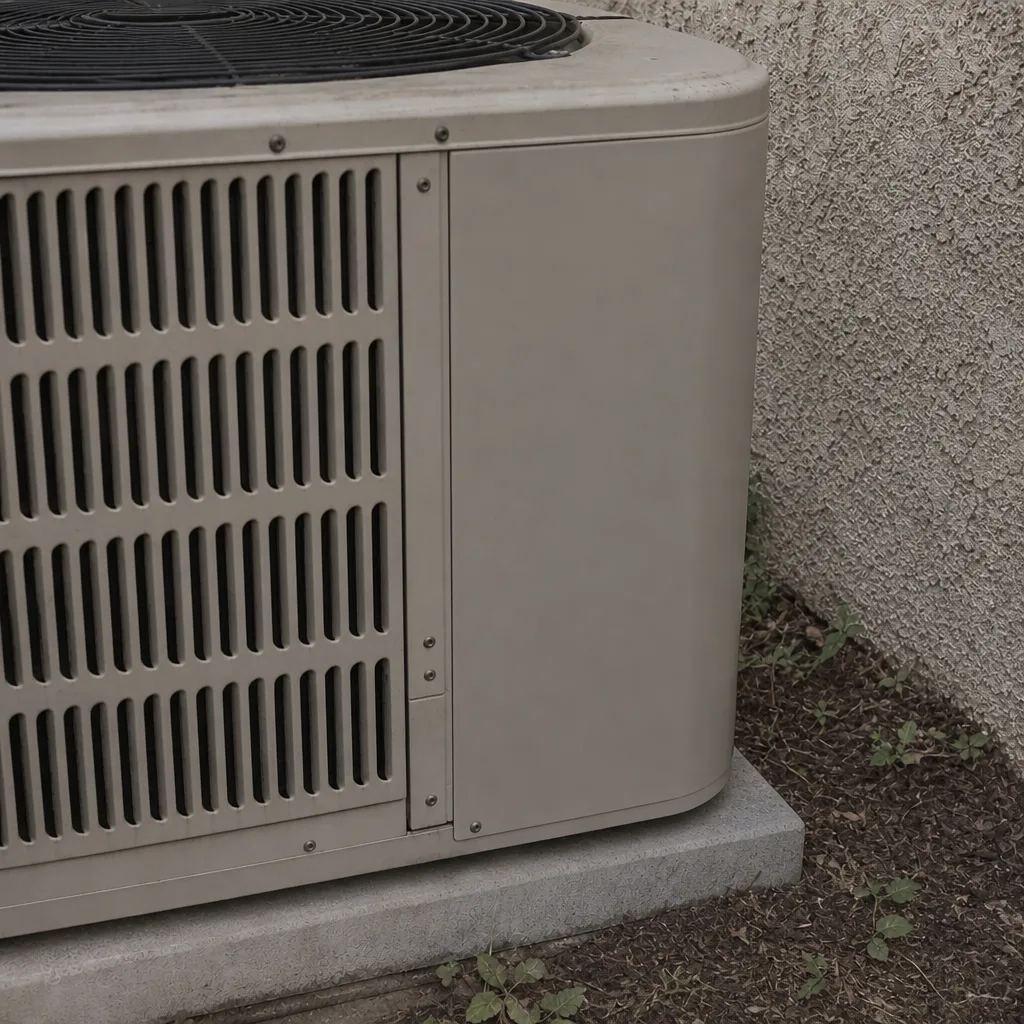
 Before
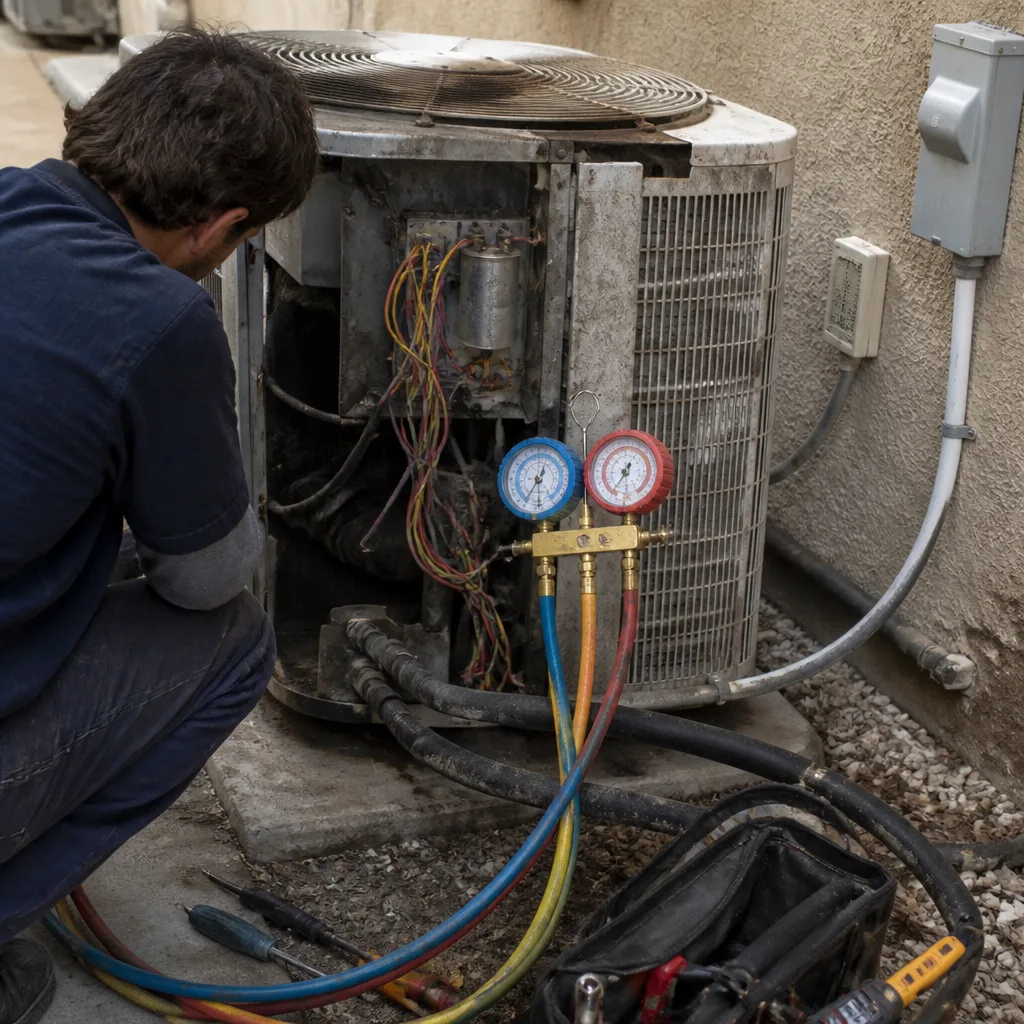
 After
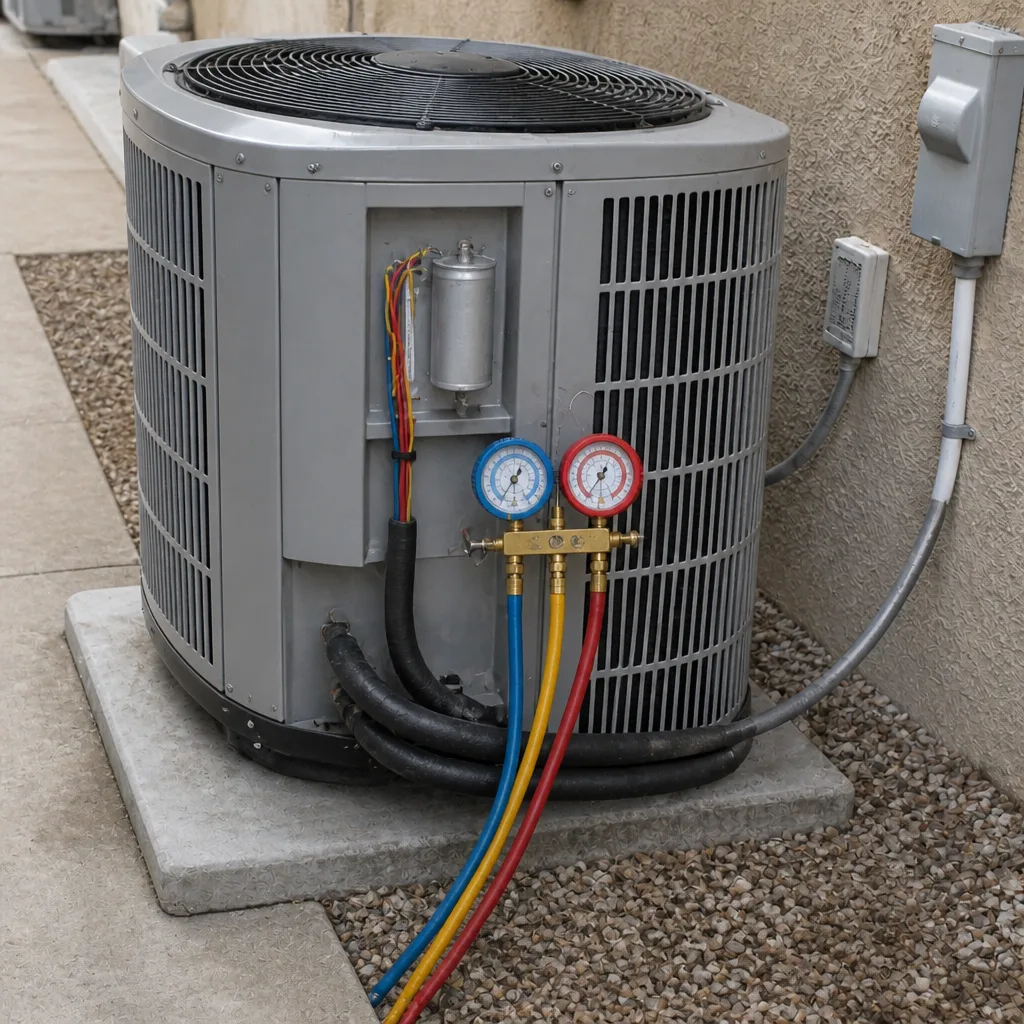
 Before
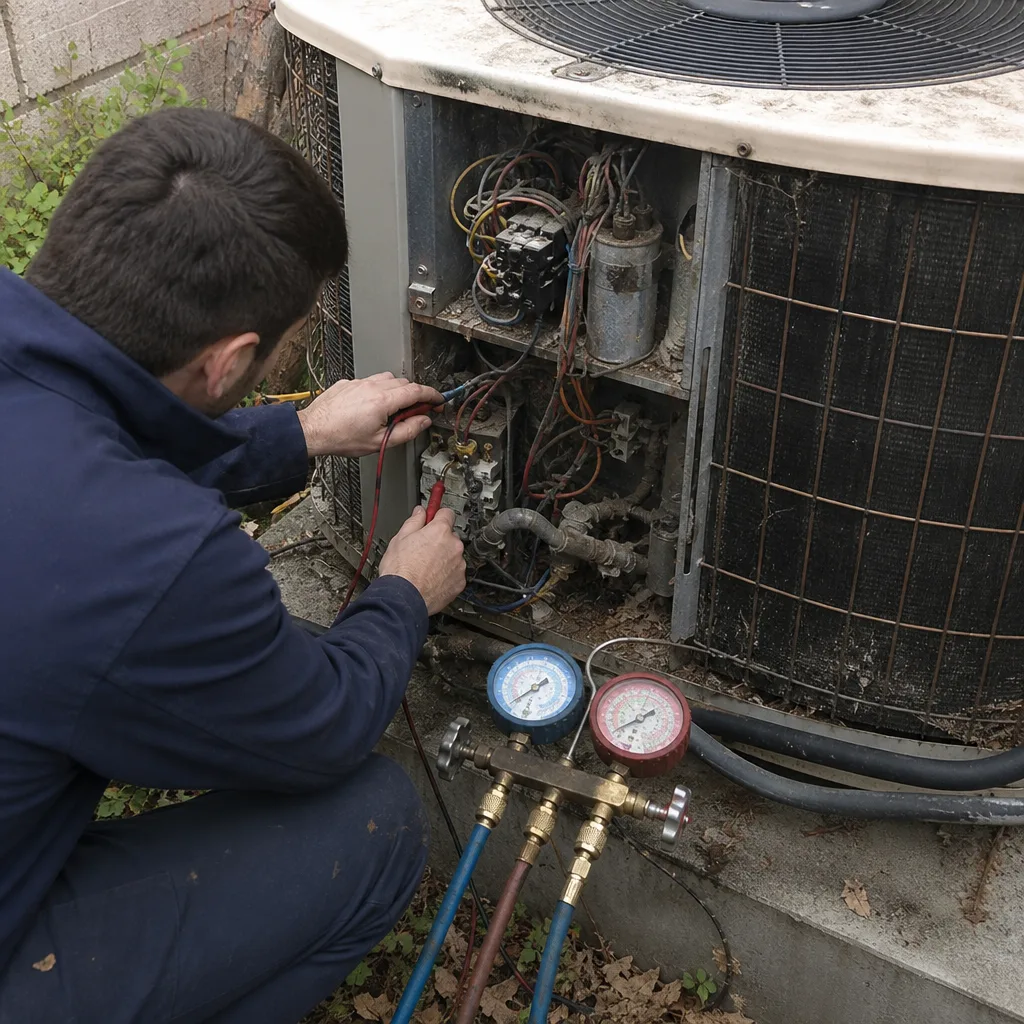
 After
 Before
 After
When to Call a Professional
Some furnace issues are within reach of a homeowner with a flashlight and a filter. Others aren’t, and it matters to know which is which. Call a professional if the furnace is emitting any smell of gas, if the flame is yellow or flickering instead of a steady blue, if you see soot or scorching around the unit, if the exhaust vent is leaking combustion byproducts into the space, or if the heat exchanger is believed to be cracked. Gas-fired equipment and combustion analysis are not DIY territory, and a CO issue is a health-and-safety matter that warrants immediate attention. Beyond safety, call a professional if the unit won’t start after a filter and thermostat check, if it starts and shuts off within a few minutes, if the code doesn’t match the sticker, or if the repair-vs-replace math is close and you want a second opinion on which side of the line you’re on.
AC Repair Spring Valley offers free estimates in Spring Valley – call (866) 773-7426. We answer 24/7. Fast dispatch from 7am to 7pm, Sunday through Friday.
Frequently Asked Questions
Furnace replacement in Spring Valley typically lands somewhere in the range homeowners get quoted in writing after a load calculation and equipment selection – the range spans mid-thousands for a value-tier unit up through significantly more for premium high-efficiency equipment, and the written estimate sets the final price. Get the quote in writing with the model number and AFUE rating named. Call (866) 773-7426 for a free estimate.
No – the new furnace should be sized to the home using a load calculation, not matched to the old unit. The old furnace may itself have been oversized or undersized for the home, and installing a new unit to match perpetuates the problem. A proper quote includes the sizing method.
A furnace that starts, runs briefly, and shuts off is usually dealing with restricted airflow, a failing limit switch, a dirty flame sensor, or a partially blocked flue – not an ignition problem. Check the filter and return grilles first, then read the error code. If the filter is clean and the code points to a limit or pressure switch, that’s a diagnostic call. Call (866) 773-7426 for an exact quote on the repair – estimates are free.
We service and install equipment from nine major brands: Carrier, Trane, Lennox, Goodman, Rheem, York, Daikin, Bryant, and American Standard. That covers the vast majority of residential systems in service today, including the ones most commonly found in Spring Valley homes. If you have a system on that list, we work on your brand.
Not always – the replacement decision on a cracked heat exchanger depends on the furnace’s age, its efficiency tier, the rest of its service history, and the specific exchanger involved. Under 10 years, warranty and repair are often the right path. Past 15 years, replacement is usually the reasonable call. Ask the technician which exchanger, where the crack is, and what the warranty status is – a legitimate diagnosis answers all three.
Replacement is scheduled work, not same-day work, because it involves equipment ordering, load calculation, and a permit where one is required. Once scheduled, the installation itself is typically a full-day project for a straightforward swap and longer if ductwork or venting changes are involved. Ask for a written timeline with the quote. Call (866) 773-7426 to start the process – estimates are free.
If both are past their reliable life (generally 12-15 years for each side), replacing them together is often more efficient than two separate projects, because ductwork, refrigerant lines, and electrical provisions can be addressed in one visit and one permit cycle. If the cooling side is still in good health, there’s no reason to replace it. Have both evaluated – see our AC Repair Spring Valley pages for the cooling side and our Spring Valley page for local context. Call (866) 773-7426 for a free estimate on either.
The Bottom Line
Most furnace failures aren’t system failures – they’re component failures on a system that still has years of useful life left. The five-year repair cost rule, a component-by-component map, and the ability to read a diagnostic code takes you most of the way to a well-informed decision on your own. What remains is judgment: whether the crack is really terminal, whether the technician’s recommendation matches the evidence, and whether the install quality behind a quote matches its bottom line. That judgment is what a good HVAC technician brings to the visit, and it’s the standard we hold ourselves to when we walk into a Spring Valley home with a furnace problem.
Call (866) 773-7426 for a free estimate on furnace repair or replacement. We answer 24/7. Fast dispatch from 7am to 7pm, Sunday through Friday. We work on your brand – Carrier, Trane, Lennox, Goodman, Rheem, York, Daikin, Bryant, and American Standard – and we’ll tell you what it actually needs.
Written by the team at AC Repair Spring Valley.