
Last updated November 16, 2026
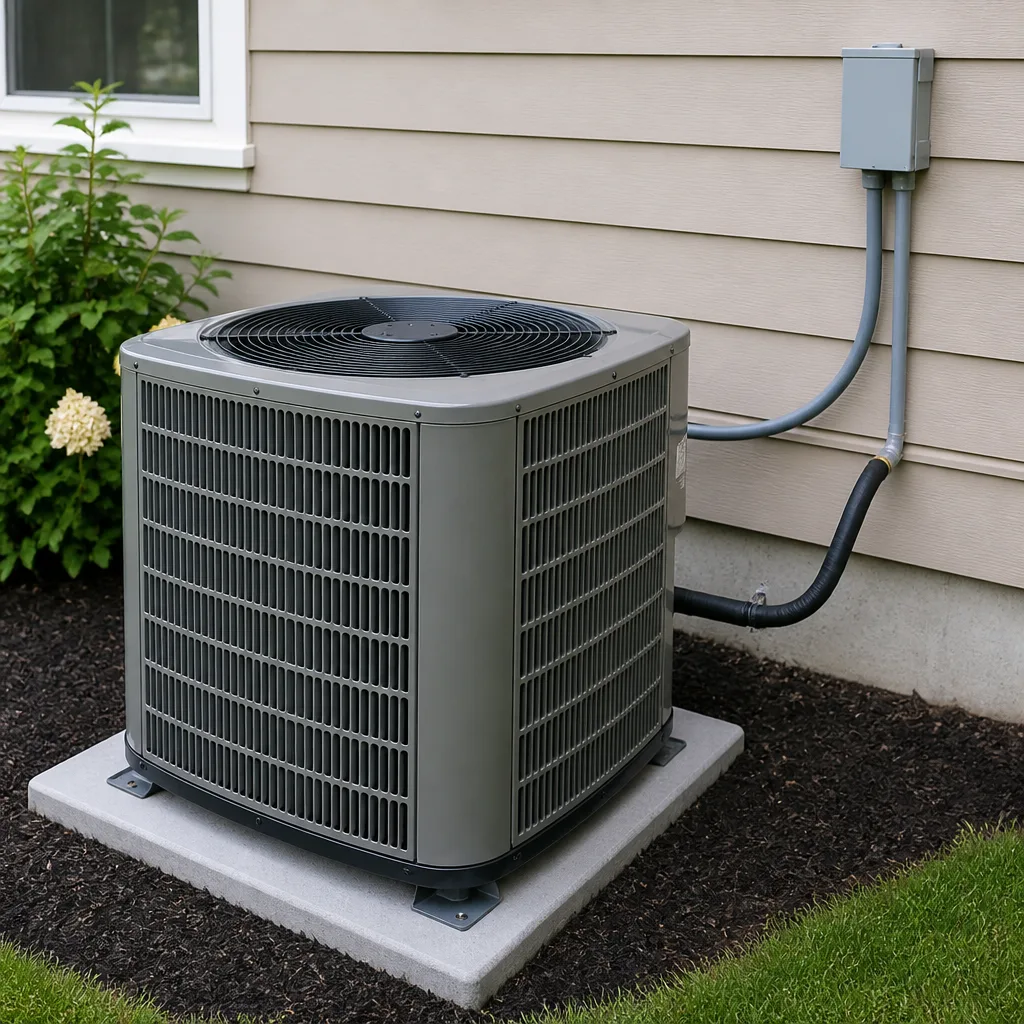 AC repair
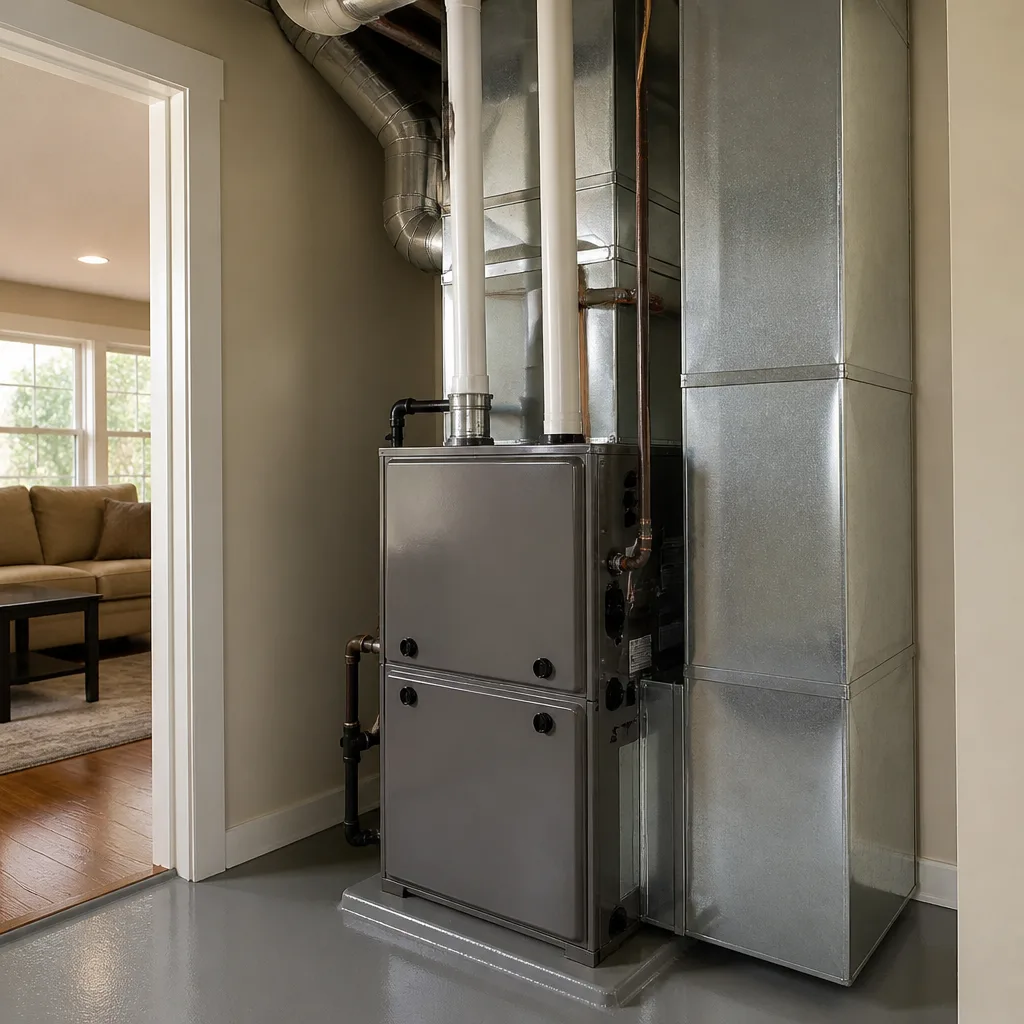 Furnace & heating
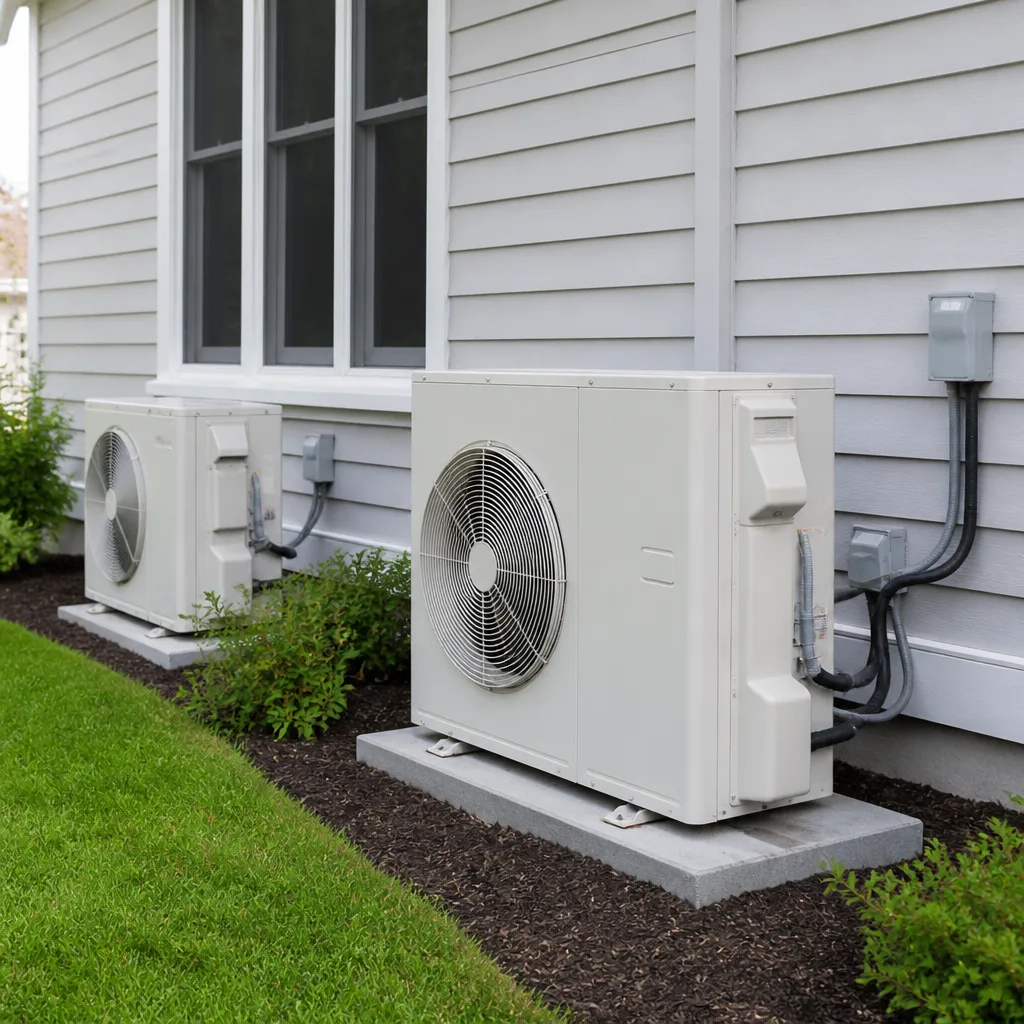 Heat pumps
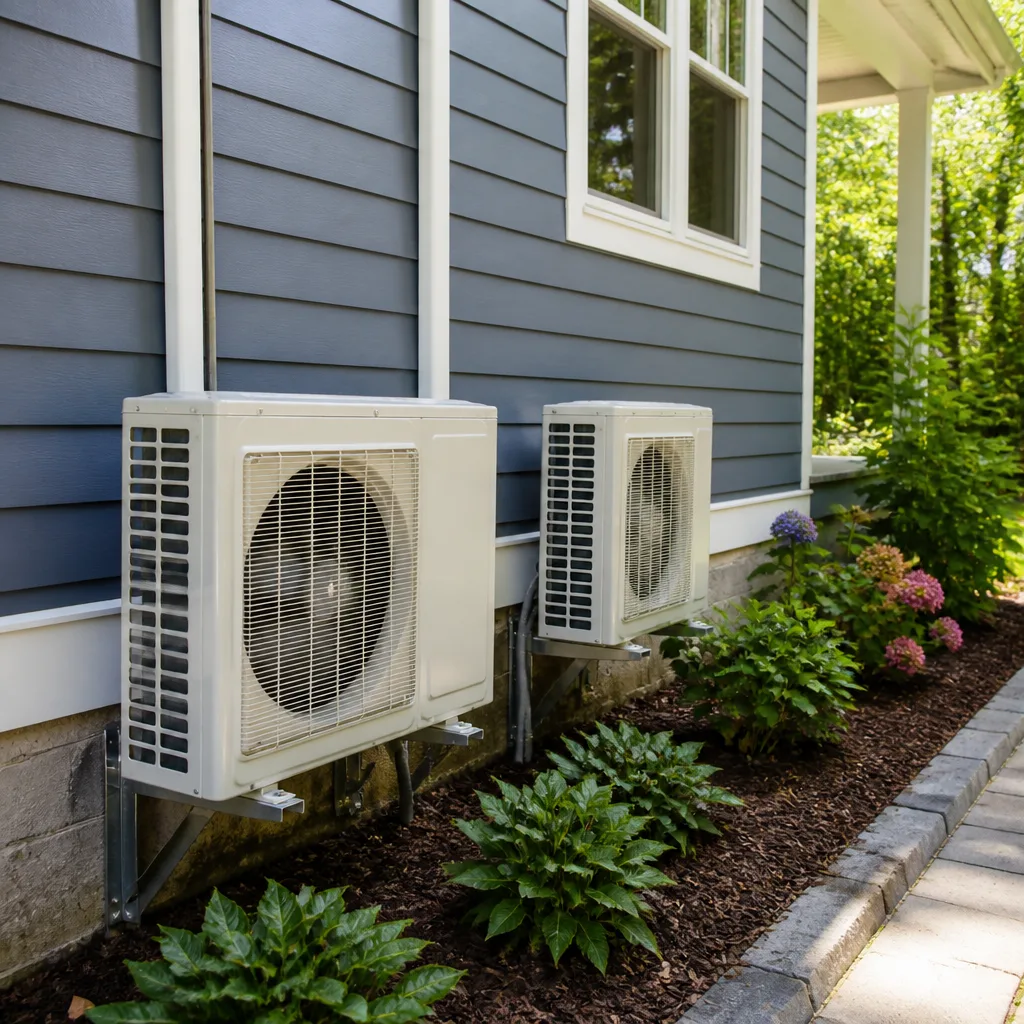 Ductless mini splits
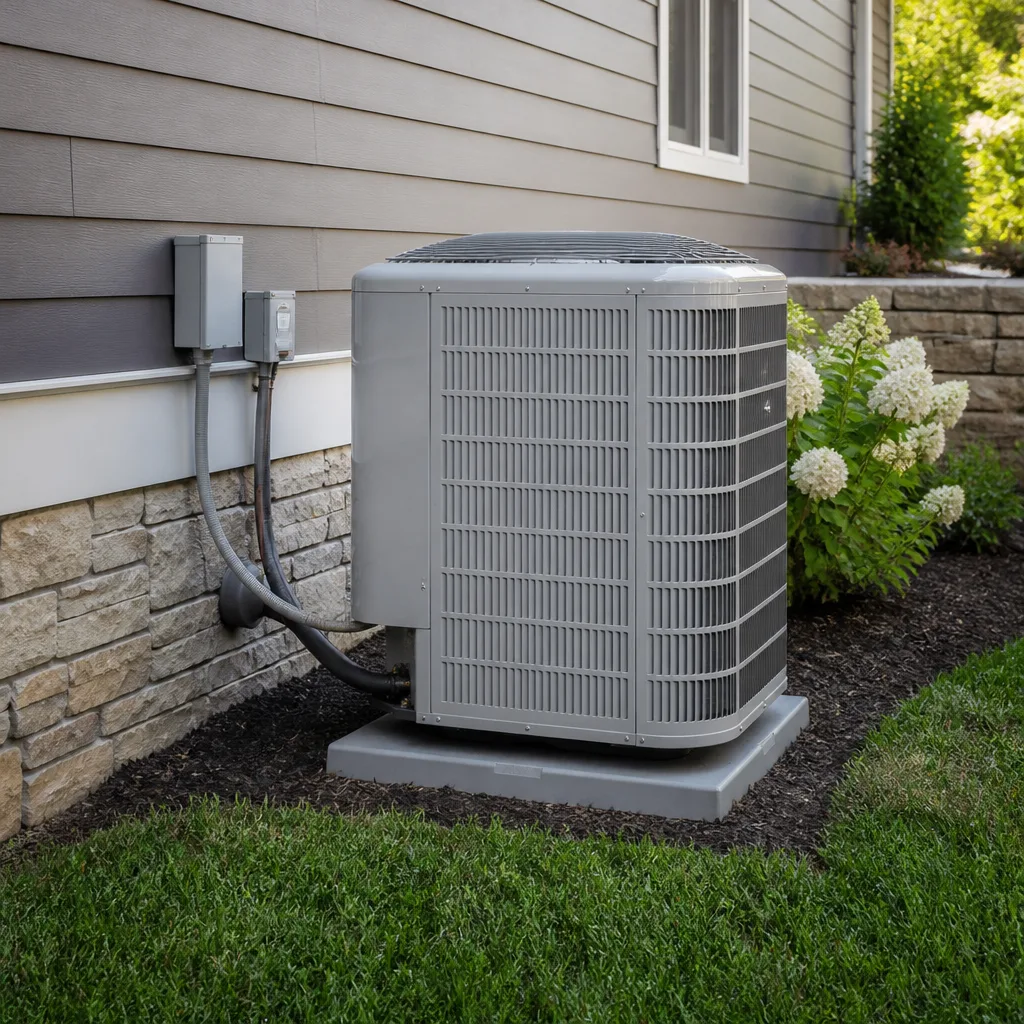 Carrier
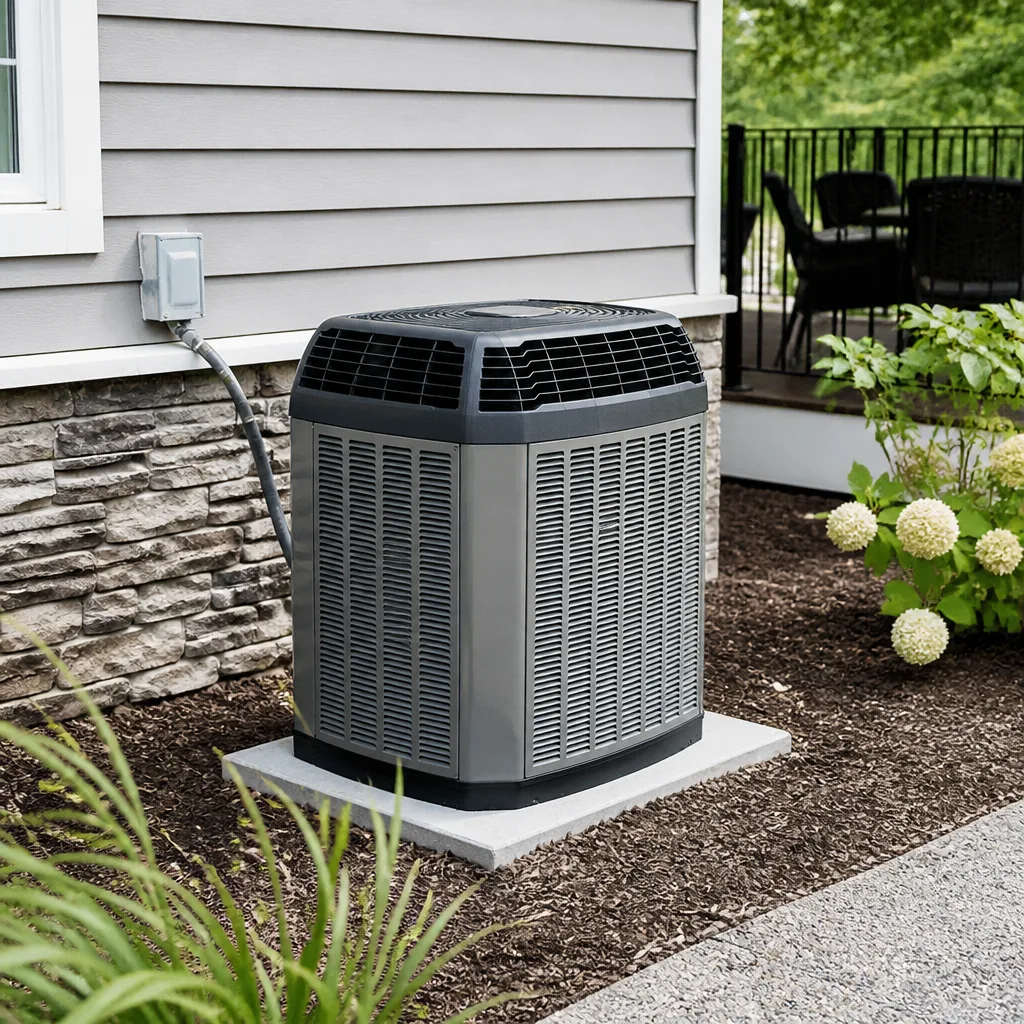 Trane
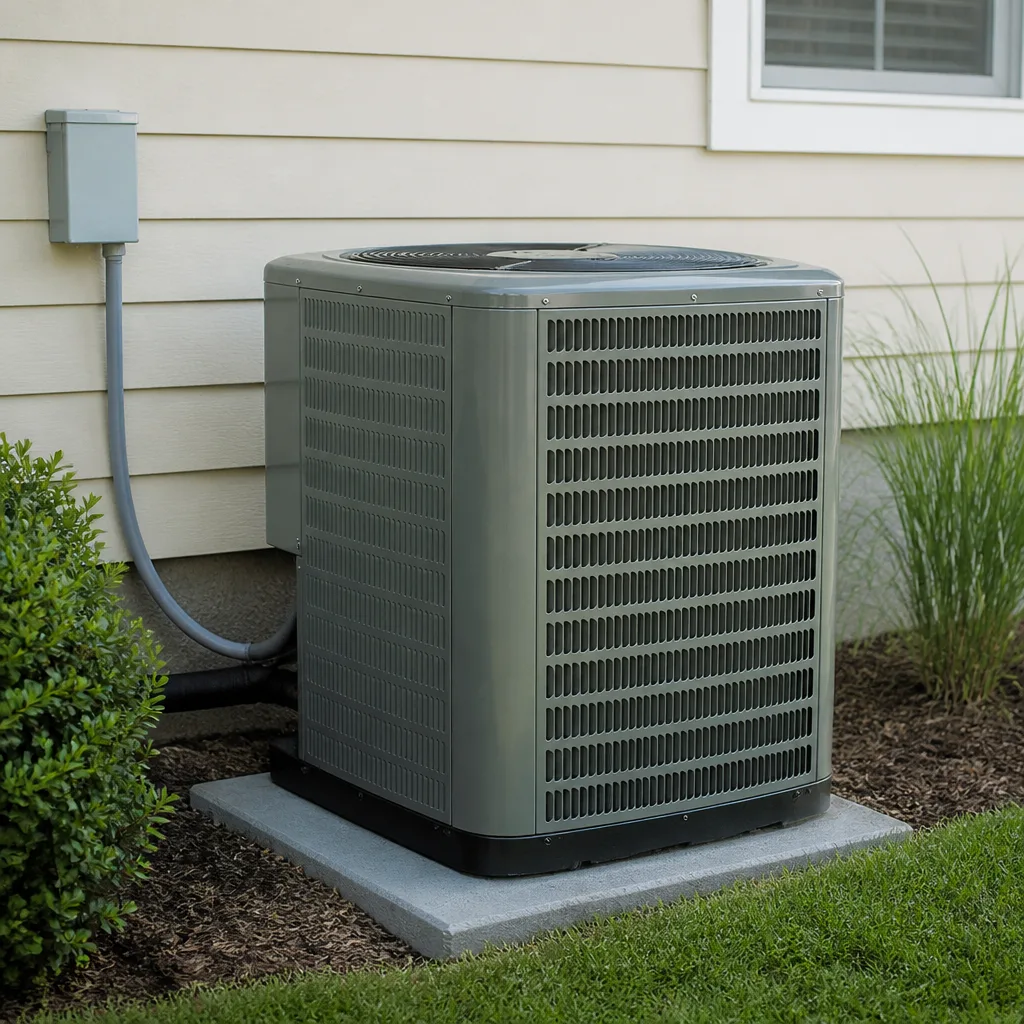 Goodman
Seasonal tune-up and full diagnostic on your Carrier, Trane, or Goodman system - readings shown to you before any repair is proposed
Diagnosis first, numbers second - you approve the repair price before a single part goes in.
Get your free estimateHVAC Warning Signs: A Spring Valley Homeowner’s Reference Guide
A unit blowing warm air in July in Spring Valley is not automatically an emergency. It is a symptom with several possible causes, and only some of them require same-day service. Most homeowners jump straight to panic or straight to waiting, and both reactions cost money. What’s missing is a way to rank what you’re seeing before you pick up the phone. This guide gives you that ranking: how to sort warning signs by urgency, how desert heat changes what a failing system looks and sounds like, and how to document what you observe so a technician diagnoses your equipment correctly the first time.
Quick Answer
HVAC warning signs fall into three urgency tiers: call now (burning smells, buzzing at the breaker, ice on the lines, water pooling, no air at all in extreme heat), schedule this week (weak airflow, warm air from vents, unusual cycling, rising energy use), and monitor and document (minor noises, small temperature gaps between rooms). Burning smells, repeated breaker trips, and any electrical buzzing mean shut the system off at the thermostat and breaker before you call. Everything else can usually be booked into a normal visit.
Styles & brands we work with
- AC repair
- Furnace & heating
- Heat pumps
- Ductless mini splits
- Carrier
- Trane
- Goodman
Table of Contents
- The Three-Tier Triage Framework
- Electrical Warning Signs That Require Immediate Shutdown
- Desert-Specific Symptoms Most Guides Miss
- Filter, Refrigerant, or Compressor? Reading the Clues Without Tools
- The Documentation Protocol: What to Log Before You Call
- Warning Signs on the Heating Side
- When Symptoms Point to Repair vs. Replacement
- Common Mistakes to Avoid
The Three-Tier Triage Framework
The first question isn’t “what’s broken?” It’s “how fast does this need attention?” Ranking a symptom before you call anyone keeps you from paying for urgency you didn’t need, and keeps you from sitting on a problem that’s getting worse by the hour. In a Spring Valley summer, the stakes climb quickly: a system that quits at 6am in July is a health concern by afternoon, but the same symptom in November is a scheduling matter.
Tier 1: Call Now
These signs mean the system should be shut off, not run “just until the technician arrives.”
- Burning, hot-plastic, or metallic smells from vents or the outdoor unit
- Buzzing, clicking, or humming from the breaker panel or the disconnect box near the condenser
- Repeated breaker trips after resetting
- Ice forming on the refrigerant lines or the indoor coil
- Water pooling around the indoor unit or in the ceiling below it
- No air movement at all, with outdoor temperatures in the triple digits
- Any sparking, scorching, or discoloration near electrical components
Tier 2: Schedule This Week
These are real problems, but they don’t require you to shut anything down. Book a visit and keep the system running in the meantime unless it gets worse.
- Air from the vents is cool but not cold, or warm on cooling mode
- Airflow is noticeably weaker than last season
- The outdoor unit runs constantly and never seems to reach the set temperature
- The system short-cycles: on and off every few minutes
- Energy bills climbing without a change in use
- A persistent rattle, squeal, or grinding that wasn’t there before
Tier 3: Monitor and Document
Small things that don’t threaten the system but are worth tracking. Log them the same way you’d log a Tier 2 symptom, because a pattern across weeks is often more diagnostic than a single visit.
- One room consistently warmer than the rest
- A faint hum or click at startup
- Thermostat reading a degree or two off from a separate thermometer
- Minor condensation you notice once and then not again
If you’re in Spring Valley and unsure which tier a symptom belongs to, that’s exactly the question to ask when you call.
Electrical Warning Signs That Require Immediate Shutdown
Some HVAC symptoms are comfort problems. Some are electrical problems wearing a comfort problem’s clothes. The difference matters because the second category can become a fire risk, and it’s the one category where a homeowner should stop troubleshooting and shut the system down.
Sounds
Buzzing at the breaker panel, at the outdoor disconnect, or from the air handler is not normal operating noise. A healthy system makes airflow sounds, a steady fan hum, and the compressor’s low chug. A buzzing that sounds electrical, a rapid chattering, or a clicking that repeats without the system starting are all signs to kill power at the thermostat and the breaker.
Smells
A dusty smell on first startup in the fall is common and usually harmless. A burning smell is not. Hot plastic, scorched wire, or anything that smells like an electrical fault means stop. Turn the system off at the thermostat, then at the breaker, and leave it off until a technician has looked at it. In a Spring Valley home where the AC runs almost continuously for months, a small electrical fault gets hours of runtime to develop, not minutes.
Breaker Behavior
A breaker that trips once might be a fluke. A breaker that trips again after you reset it is telling you something. Do not reset it a third time. A tripping breaker is the electrical equivalent of a warning light, and repeated resetting pushes current through a fault that’s already been identified.
Discoloration and Heat
Check the area around your breaker panel and the disconnect box near the condenser. Scorching, browning, melted insulation, or a panel that feels warm to the touch is a stop-and-call situation. So is any smell of hot insulation in the attic or closet where the air handler sits.
Electrical work inside HVAC equipment belongs to a trained professional. This is not a repair to attempt yourself, and it’s not a symptom to “watch and see” if it repeats. Shut it down and call.
Desert-Specific Symptoms Most Guides Miss
Spring Valley’s climate does something to HVAC systems that a guide written for a mild-climate market won’t account for. Summer here regularly pushes well past 100°F, and the valley’s dry air, dust, and hard water all leave fingerprints on how a failing system presents. If you’re reading a general article and the symptoms don’t match what you’re hearing, it’s probably because that article was written for a different climate.
High-Static Operation Sounds Different in Dry Air
In dry desert air, dust and debris build up faster on coils, blower wheels, and filters, and that buildup changes the sound of the system. A unit operating with high static pressure (restricted airflow) often has a slightly strained, “pushing” sound from the vents, or a blower that seems louder than it used to be. In a humid climate, that same restriction might show up first as condensation or mold. Here, it shows up as noise and weak airflow. If your vents sound more forceful but the air feels weaker, that’s a pressure problem, not a performance upgrade.
Refrigerant Issues Look Different at 108°F Than at 85°F
Many guides describe “warm air” as the classic low-refrigerant symptom. That’s true, but in Spring Valley’s peak heat, a slightly undercharged system can still produce air that feels cold at the vent while the house never actually cools. What you notice instead is the system running nonstop, the outdoor unit staying on well past when it should cycle off, and rooms that stay a few degrees above the setpoint even after hours. Ice on the lines is the more definitive sign, and when you see it, shut the system off. Running a system with low refrigerant in extreme heat puts extra strain on the compressor, which is the most expensive part to replace.
Dust and Coil Fouling
The valley floor collects dust, and a condenser coil packed with it can’t reject heat the way it should. That shows up as a system that runs longer each season, gradual loss of cooling, and higher bills. A coil that’s visibly matted with dust or cottonwood fluff needs cleaning before you assume the system is failing.
Hard Water and Drain Lines
Spring Valley’s water is hard, and condensate drain lines and drain pans can scale and clog. A clogged drain line backs water up into the pan, and then into your ceiling or walls. If you notice standing water or a musty smell near the air handler, treat it as a Tier 1 symptom even if the cooling seems fine.
Filter, Refrigerant, or Compressor? Reading the Clues Without Tools
Three of the most common “cooling problem” symptoms, weak airflow, warm air, and a system that won’t keep up, can come from very different causes. You can narrow it down substantially with nothing but your eyes and ears. Here’s the order to work through.
Step 1: Check the Filter First
- Turn the system off at the thermostat.
- Pull the filter and hold it up to a light. If you can’t see light through it, it’s clogged.
- Note the filter’s condition and how long it’s been in place. A filter that’s matted in a month is a sign of a dust issue or a system running with restricted return air.
- Replace it and run the system for an hour. If airflow returns to normal, filter was your problem.
A dirty filter causes weak airflow, high energy use, and a system that struggles to keep up. It doesn’t cause warm air from the vents on its own. If the air is warm after a filter change, the problem is elsewhere.
Step 2: Look for Ice and Water
Ice on the refrigerant lines or the indoor coil points to low refrigerant or restricted airflow. Water around the indoor unit points to a clogged drain or a frozen coil melting. Both are Tier 1 symptoms. Shut the system off and call.
Step 3: Listen to the Outdoor Unit
- Steady fan and low compressor hum: normal.
- Compressor tries to start but clicks off: likely an electrical or capacitor issue. Keep it off.
- Loud grinding or screeching: mechanical failure. Keep it off.
- Runs continuously without cycling: could be refrigerant, could be a thermostat or sensor issue, could be a system that’s undersized or overloaded. A scheduled visit can sort it.
Step 4: Compare Vents
If some rooms cool and others don’t, the problem may be airflow distribution rather than the system itself. Note which rooms are affected and at what time of day. That single observation saves diagnostic time on the visit.
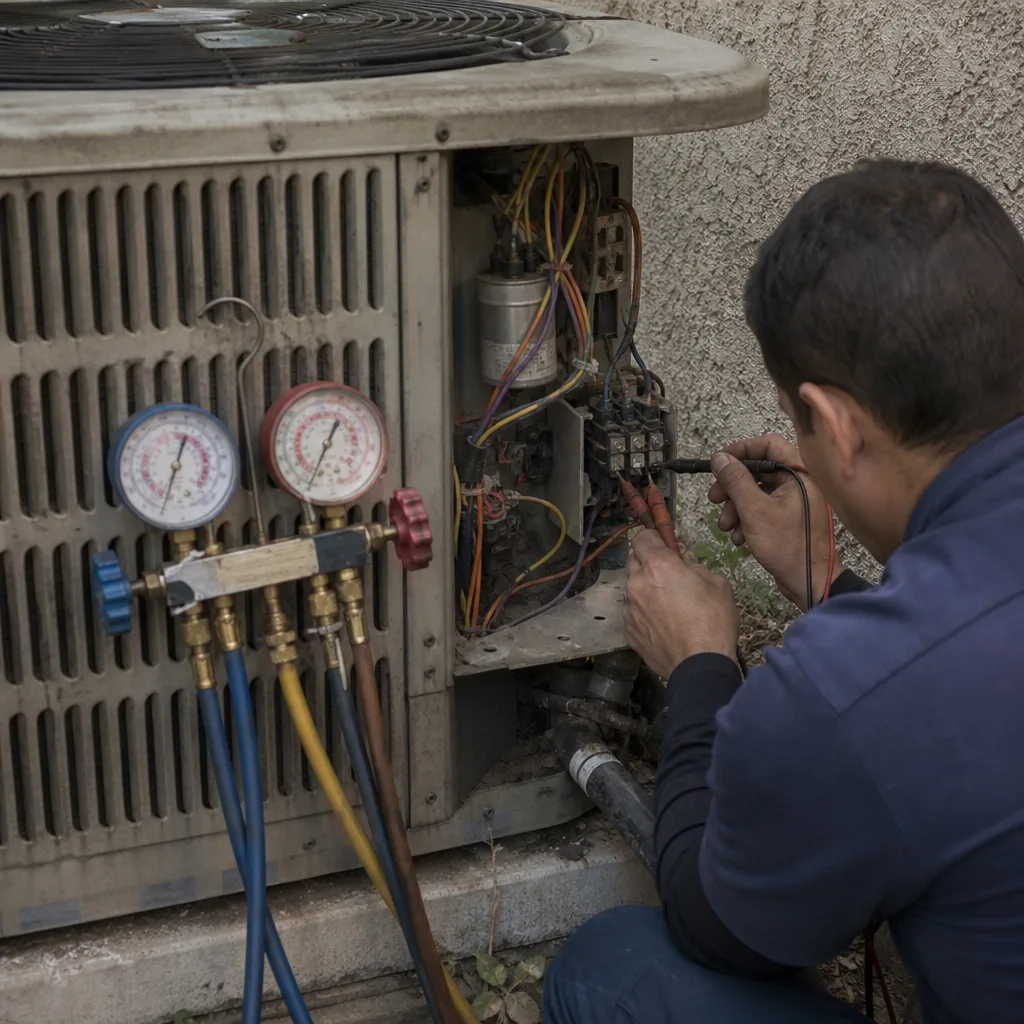
What you can’t determine without gauges is refrigerant charge and compressor health. Those need a trained technician with the right equipment.
The Documentation Protocol: What to Log Before You Call
A technician who arrives with a written history of symptoms diagnoses faster and more accurately than one who arrives with “it’s not cooling right.” You don’t need tools to build that history. You need a phone and a few minutes of attention.
What to Record
- Timestamps. When did the symptom first appear? Does it happen at a specific time of day? Every afternoon? Only on startup? Timestamped patterns point to specific causes.
- Thermostat settings and readings. Note the setpoint, the actual displayed temperature, and the outdoor temperature. A photo of the thermostat display during a symptomatic moment is worth more than a paragraph of description.
- What you observe. Air temperature at a vent (hand-tested is fine, a cheap thermometer is better), airflow strength compared to a normal day, and any sounds or smells. Photos of ice, water, or scorch marks are the most valuable information you can hand over.
- Filter condition and age. Date of the last change, and a photo of the old filter.
- What you already tried. Reset the thermostat? Changed the filter? Reset the breaker? Note it. It saves the technician from covering ground twice.
- What changed recently. New thermostat, new furniture blocking a return, a recent power surge, an attic remodel, a new appliance. Only you know these details, and they matter.
How to Store It
One note in your phone, one album of photos. When you call to book the visit, read the timeline back to the dispatcher. When the technician arrives, hand over your phone for a minute. That small habit is the difference between a diagnostic visit that finds the issue the first time and one that turns into a follow-up.
Warning Signs on the Heating Side
Spring Valley homeowners spend most of the year thinking about cooling, which means heating problems get caught late, often on the first cold night of the season. The warning signs are different from cooling signs, and the safety stakes are higher.
Call Now
- Any smell of gas near the furnace or the meter
- A yellow or orange burner flame instead of a steady blue
- Repeated breaker trips when the furnace runs
- Burning smells from supply vents
- Soot, scorching, or discoloration around the furnace cabinet
- A carbon monoxide alarm sounding
If you smell gas, leave the home first, then call from outside. Any question of gas or carbon monoxide is a professional’s call, not a homeowner diagnosis.
Schedule This Week
- The blower runs but the air is cool
- Short cycles, or the furnace running in very short bursts
- Weak airflow compared to last winter
- A rattle or rumble that’s new
- The system not igniting on the first attempt
Monitor and Document
- A faint click at startup
- One room warmer or cooler than the rest
- Dust building faster than usual near the return
Heating problems in Spring Valley tend to show up at the least convenient moment: the first genuinely cold night, when the system has sat idle for months. Logging signs in early autumn gives you time to book furnace repair before you actually need it.
When Symptoms Point to Repair vs. Replacement
Not every warning sign is a repair decision. Some symptoms point to a fix. Others are a system telling you it’s reached the end of its useful life. The difference comes down to what’s failing, how often, and what it costs against the price of a replacement.
Symptoms That Usually Mean Repair
- One component failing in an otherwise healthy system
- A single electrical fault with a clear cause
- A blocked or leaking drain line
- Filter restriction or dust buildup
- A clogged condenser coil
- A capacitor or contactor replacement
Symptoms That Point Toward Replacement
- Multiple components failing within the same season
- A compressor failure on equipment near the end of its service life
- A refrigerant leak that can’t be located or sealed reliably
- A heat exchanger fault in a furnace (this is a safety issue, not a repair)
- Energy bills climbing season after season with no change in use
- Constant short cycles that aren’t solved by repair
That last category is where a brand-neutral approach matters. If your system is a Carrier, a Bryant, or an American Standard, we can work on it either way. If a replacement is the right answer, we can install AC installation on the same equipment line or a different one depending on your budget. What we won’t do is push a replacement you don’t need.
Common Mistakes to Avoid
- Resetting the breaker repeatedly. A tripping breaker that keeps tripping is flagging a fault. Resetting it pushes current through the fault again. Reset once at most, then call.
- Running a frozen system to “let it catch up.” Ice on the lines means low refrigerant or restricted airflow, and running the system in that state puts strain on the compressor. Shut it off and let it thaw.
- Assuming warm air always means a refrigerant problem. In Spring Valley’s extreme heat, warm air can come from a clogged filter, a failing capacitor, a thermostat issue, or a system that’s simply overloaded. Rank the clues before you call.
- Waiting for a “real” symptom before scheduling. Spring Valley summers don’t give a failing system weeks to show itself. A weak-cooling symptom in June that gets ignored often turns into a no-cooling emergency in July.
- Replacing the thermostat to fix a cooling problem. The thermostat is rarely the problem. A new thermostat on a failing system just delays the real diagnosis.
- Not documenting the timeline. “It’s not cooling” is a diagnosis that costs time. “It stopped reaching setpoint three days ago and the outdoor unit has stayed on ever since” is a diagnosis that finds the issue on the first visit.
- Ignoring a burning smell because “it went away.” A smell that comes and goes is a fault that’s thinking about it. Shut the system down and get it looked at.
When to Call a Professional
Call a professional for anything in Tier 1, any symptom that involves gas, electrical, or a heat exchanger, and anything you’ve monitored for more than a few days without resolution. Call if you’re not sure which tier a symptom belongs to. Call before the first cold snap if you noticed any heating signs last spring. The right call is not the anxious one, and it’s not the delayed one. It’s the informed one.
If you’re in Spring Valley, the fastest way to sort a symptom is to describe it. We work on Carrier, Trane, Lennox, Goodman, Rheem, York, Daikin, Bryant, and American Standard systems, and our technicians have up to 8 years of experience diagnosing them. AC Repair Spring Valley offers free estimates in Spring Valley. Call (866) 773-7426. We answer 24/7, with fast dispatch from 7am to 7pm, Sunday through Friday.
See the difference
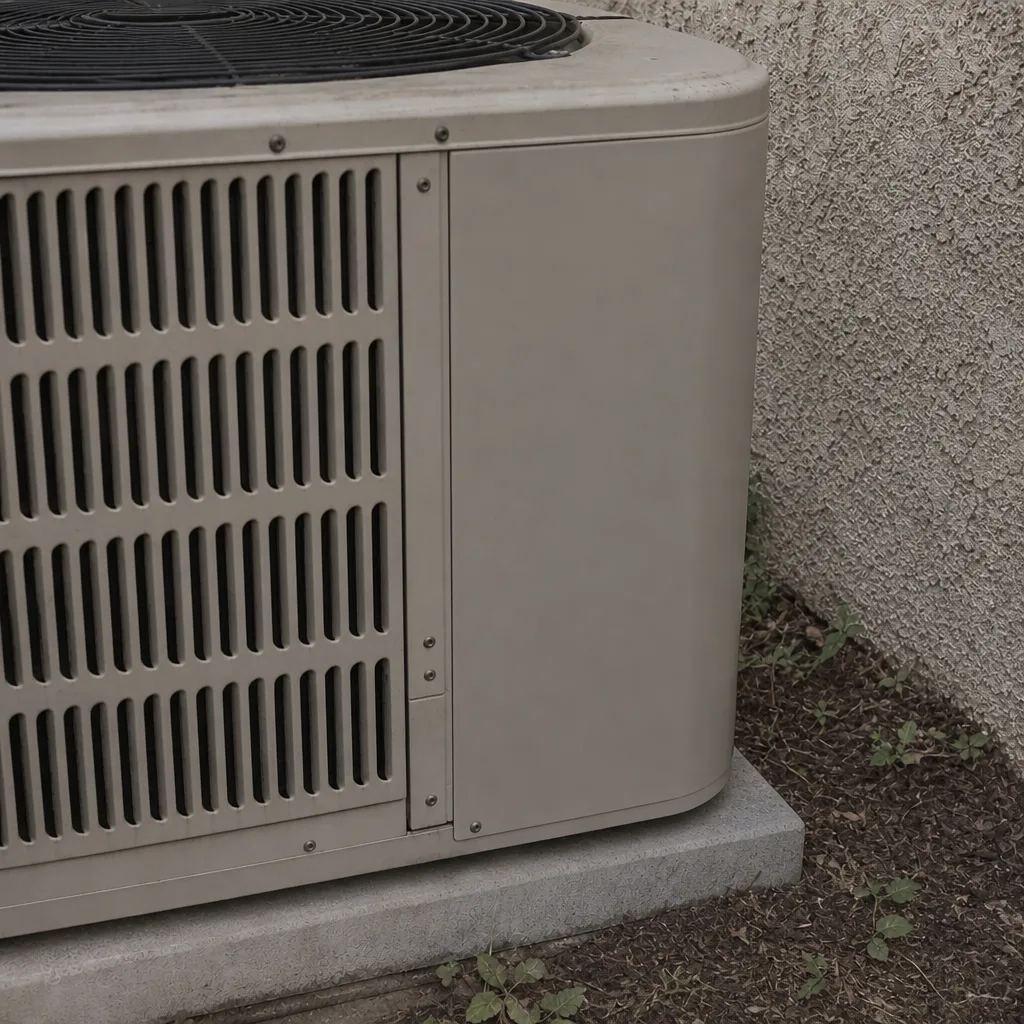
 Before
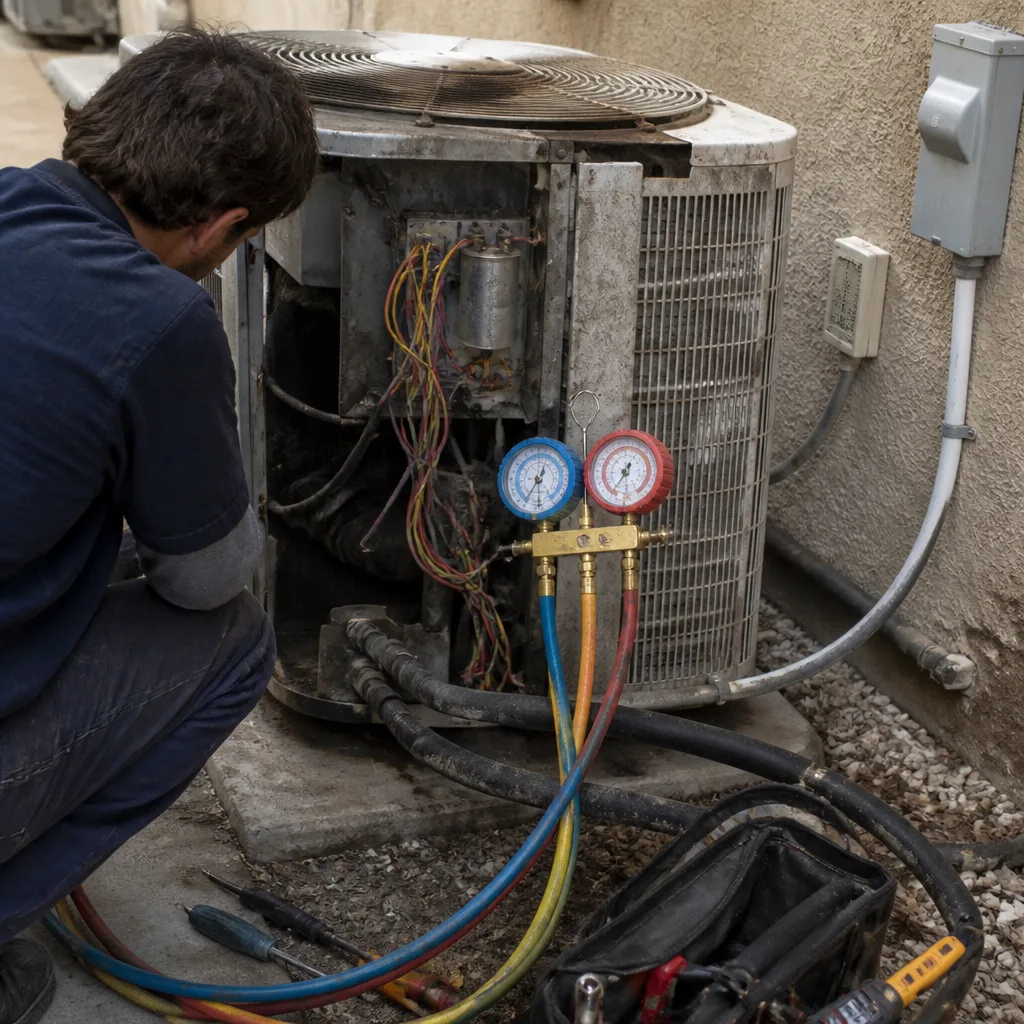
 After
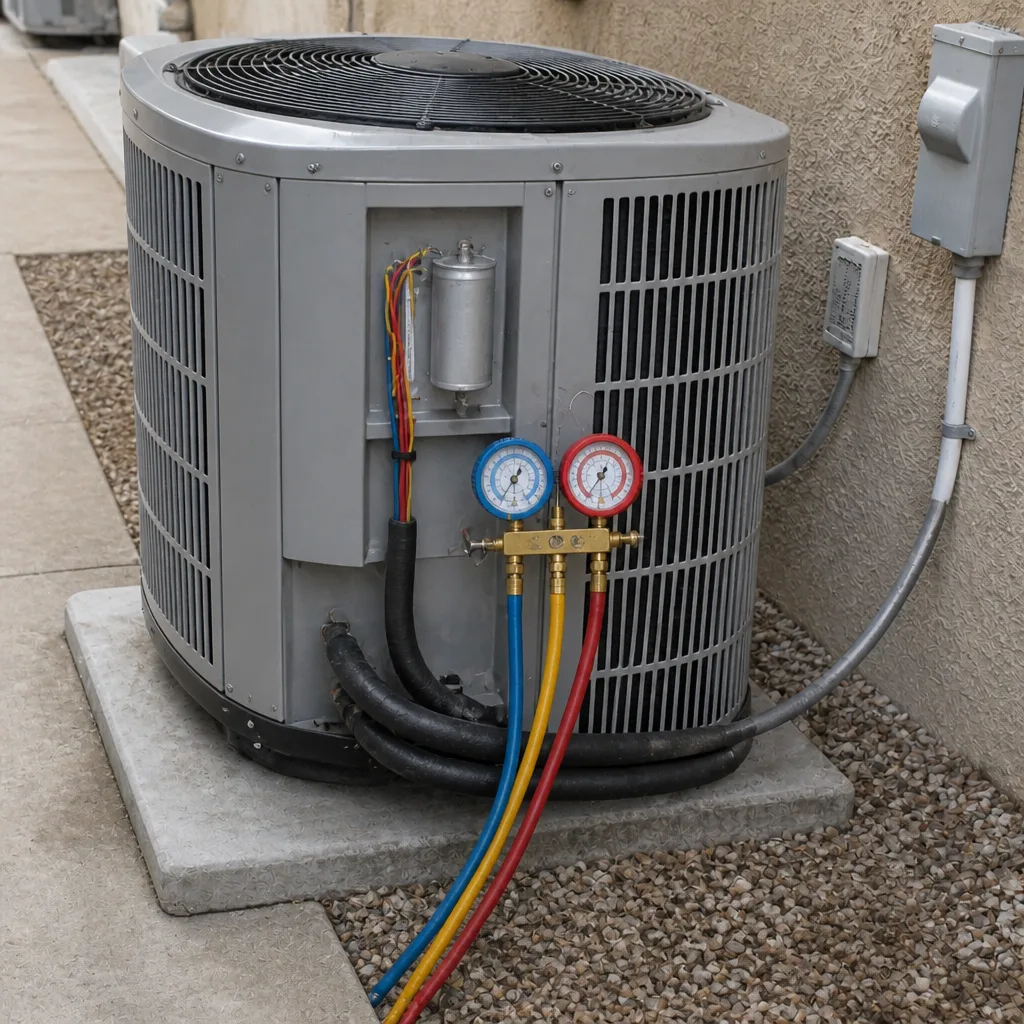
 Before
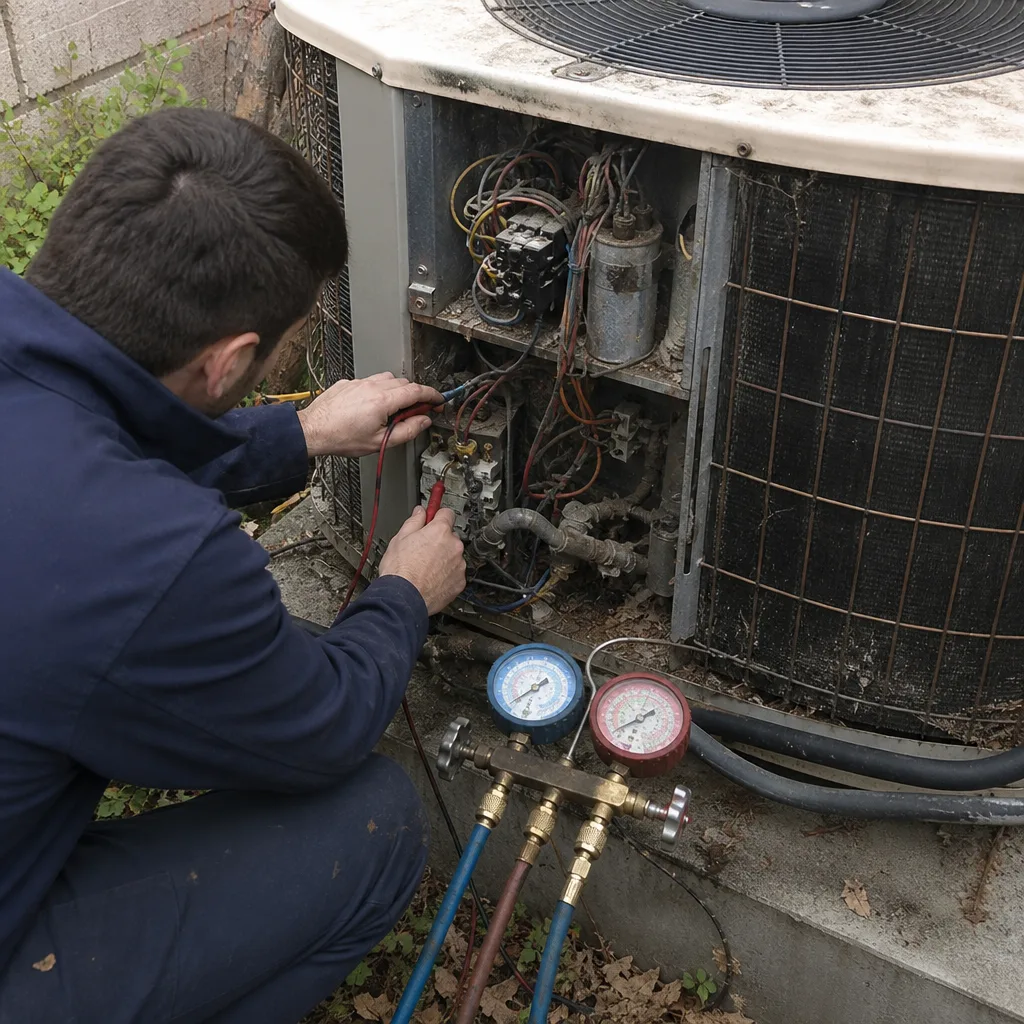
 After
 Before
 After
Frequently Asked Questions
Weak cooling and a system that runs nonstop are the two most common signs homeowners report in Spring Valley, and both usually trace to airflow restriction or a refrigerant problem. In extreme heat, a system that can’t reach its setpoint is often telling you it’s working harder than it should. That’s a Tier 2 sign worth scheduling. Call (866) 773-7426 for a free estimate.
No, warm air from the vents is usually a scheduled visit, not an emergency. It has several possible causes, from a clogged filter to a failing capacitor to a refrigerant issue, and only some of those require same-day service. Shut the system down and call if the outdoor unit is grinding, if there’s ice on the lines, or if the breaker trips. Otherwise, book a normal visit and describe the symptom. Call (866) 773-7426 for an exact quote.
Buzzing, chattering, repeated breaker trips, burning smells, and any discoloration around electrical components are electrical warning signs. They mean shut off the system at the thermostat and the breaker before you call. Electrical faults inside HVAC equipment are not a homeowner repair, and they get worse with runtime.
Yes. A diagnostic visit is more accurate when you’re there to describe the timeline and confirm what you’ve observed. Your documentation notes, thermostat photos, and outdoor unit videos give the technician more to work with than the equipment alone. It also means the technician can ask you questions about changes in the home that won’t show up on instrumentation.
We work on Carrier, Trane, Lennox, Goodman, Rheem, York, Daikin, Bryant, and American Standard systems, which covers the vast majority of residential equipment in service today. That means the recommendation comes from your system’s condition and your budget, not from brand loyalty. Call (866) 773-7426 with your model number and a description of the symptom.
The estimate is free, and the price of any repair is set per job by the written estimate, so you know the number before work begins. We don’t quote over the phone for repairs because symptoms overlap and the real diagnosis depends on what the technician finds. Call (866) 773-7426 to book a visit and get a free estimate.
The Bottom Line
Warning signs are not all the same, and the biggest mistake is a failure to rank them. Electrical smells, buzzing at the breaker, ice on the lines, and no air in extreme heat mean shut it off and call now. Weak airflow, warm air that still moves, short cycles, and rising bills mean book a visit this week. Minor quirks get documented and watched. In Spring Valley’s heat, dust, and hard water, a system rarely fails without warning, it just fails quietly until you notice. Log what you see, rank it against the framework above, and call when the tier says call.
Related Reading
- AC Repair Spring Valley for the main service overview
- Spring Valley HVAC service details
- AC installation when repair is no longer the right answer
- furnace repair for the heating side of the equation
Ready to Sort It Out?
If you’ve read this far and you’re still not sure which tier your symptom belongs to, that’s the call to make. Describe what you’re seeing to a technician and get an honest answer about whether it needs same-day service or a scheduled visit. Call (866) 773-7426 for a free estimate. We answer 24/7, with fast dispatch from 7am to 7pm, Sunday through Friday. We work on nine major brands, from Daikin to American Standard, and we’ll tell you what your system actually needs. Our technicians have up to 8 years of experience. One call for heating and cooling, and a diagnosis you can trust the first time.
Written by the team at AC Repair Spring Valley.