
Last updated November 16, 2026
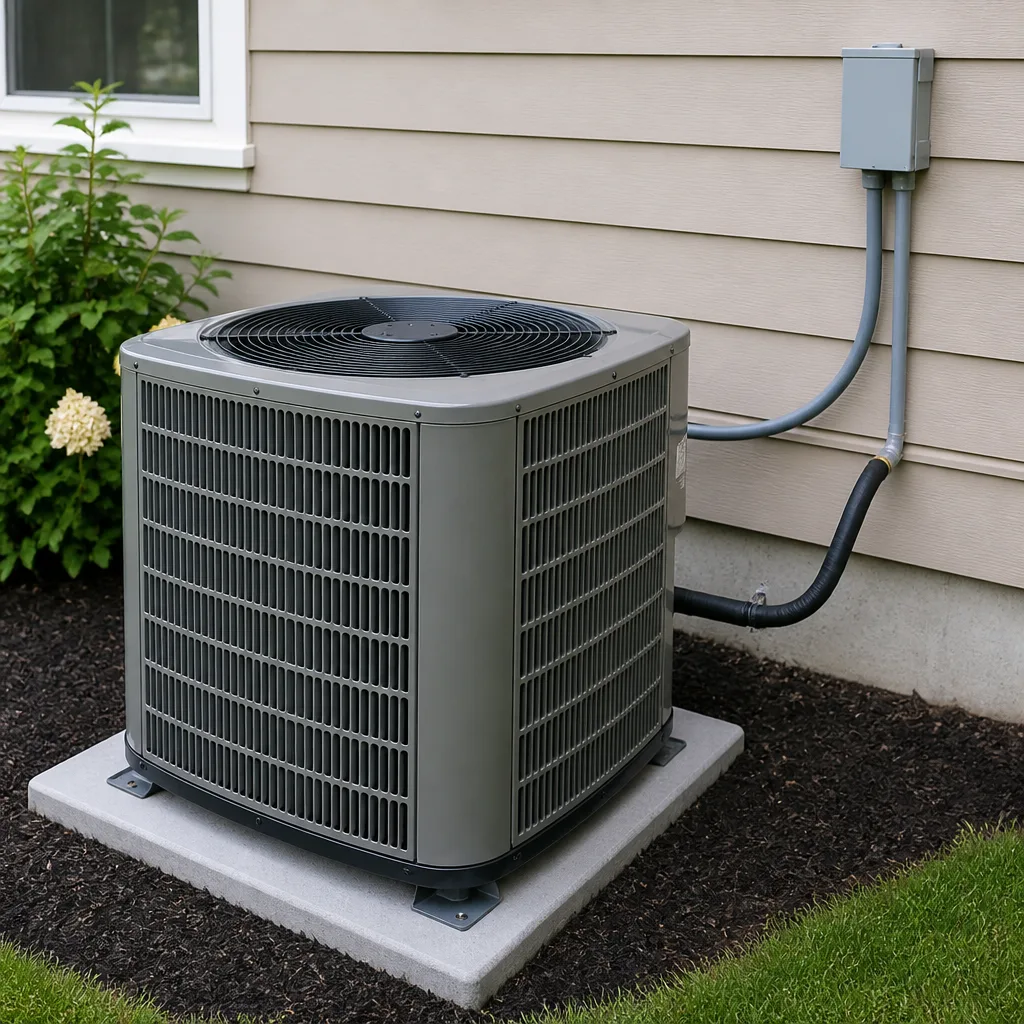 AC repair
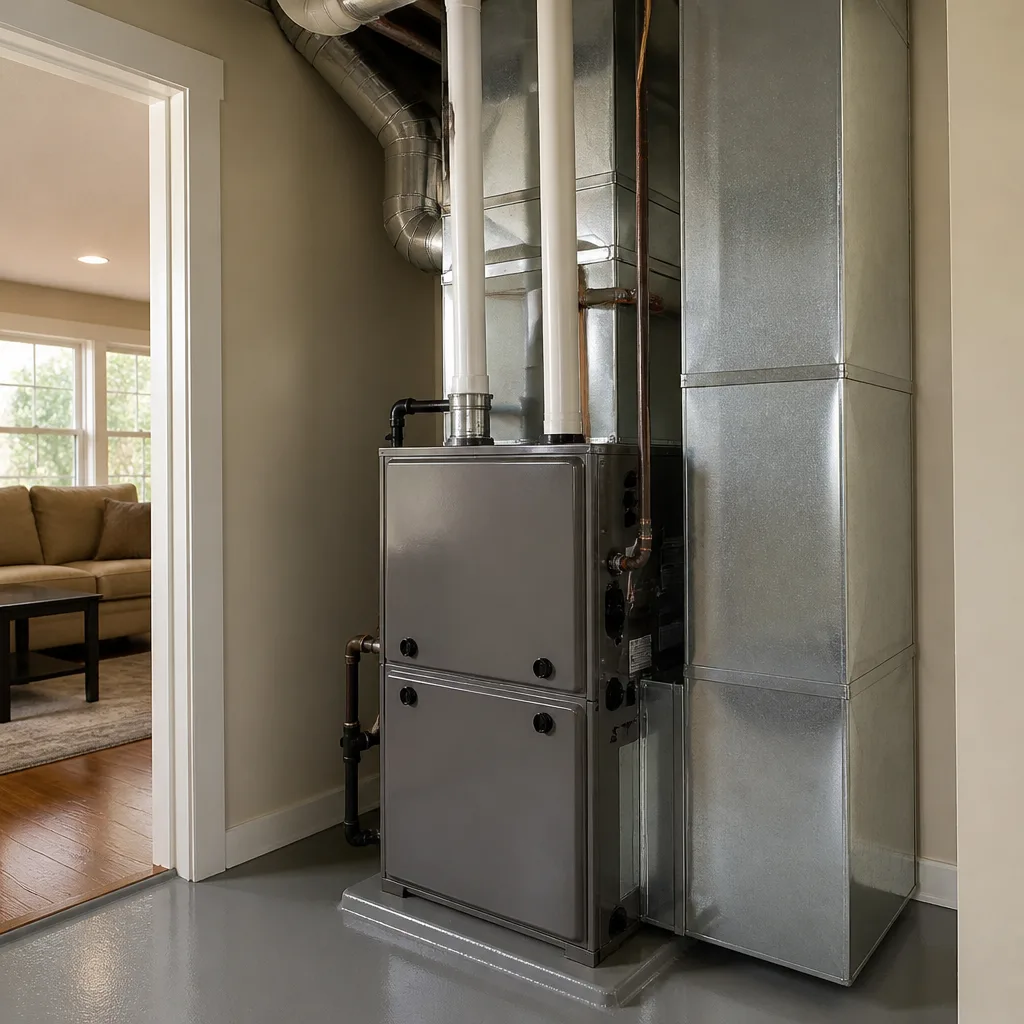 Furnace & heating
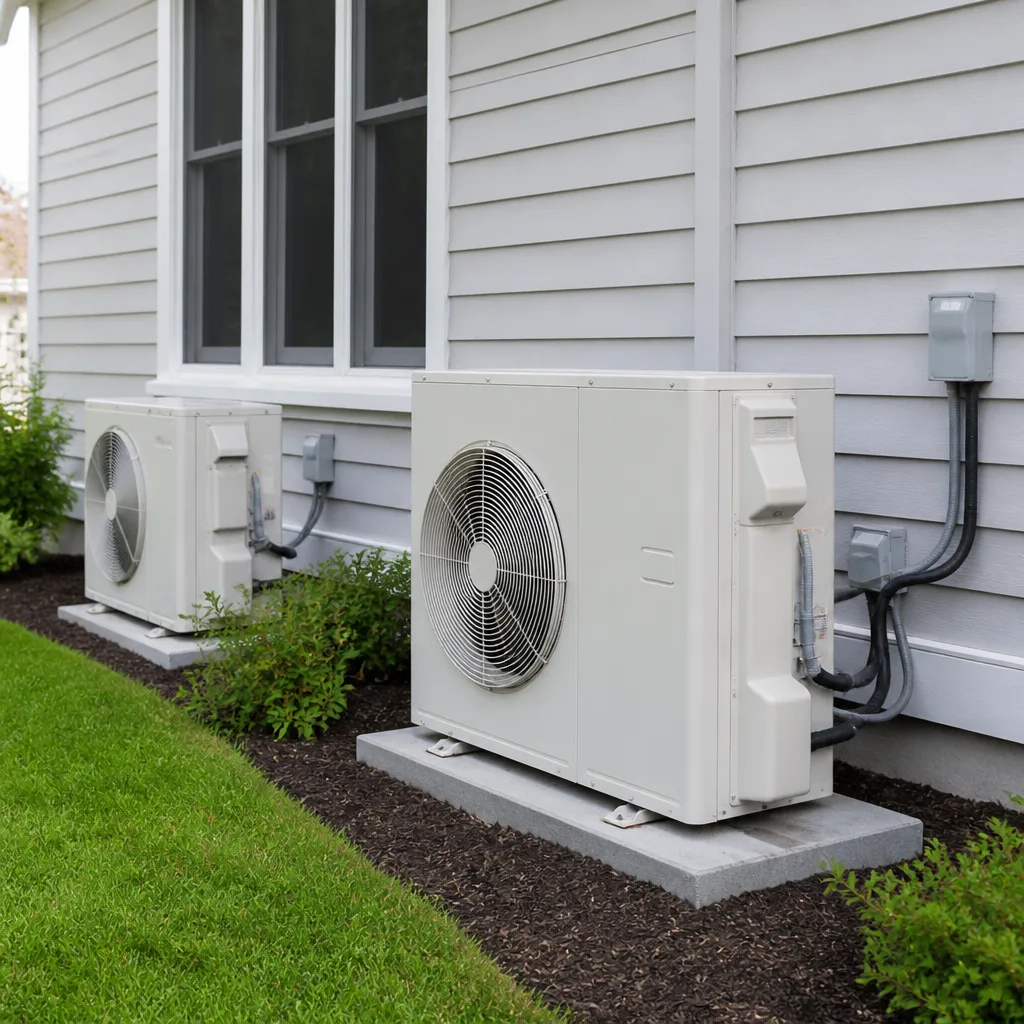 Heat pumps
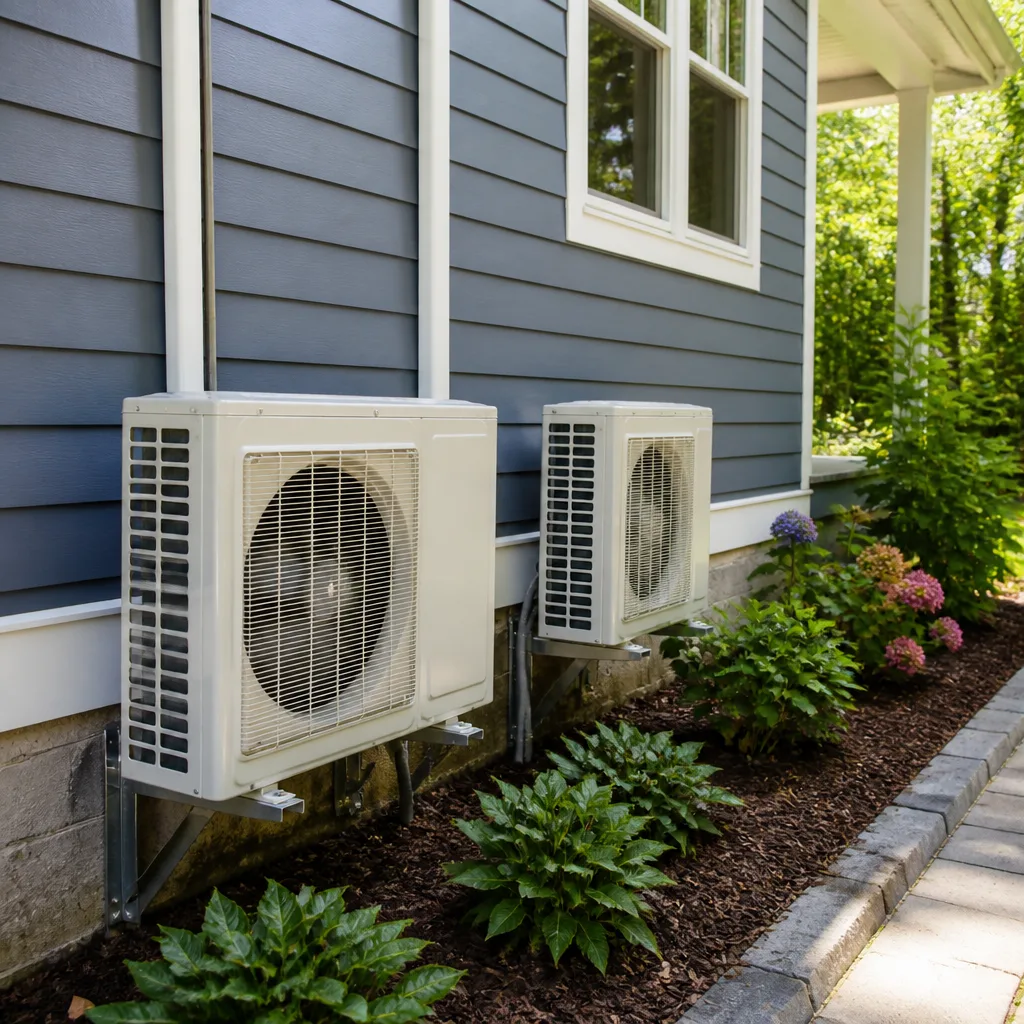 Ductless mini splits
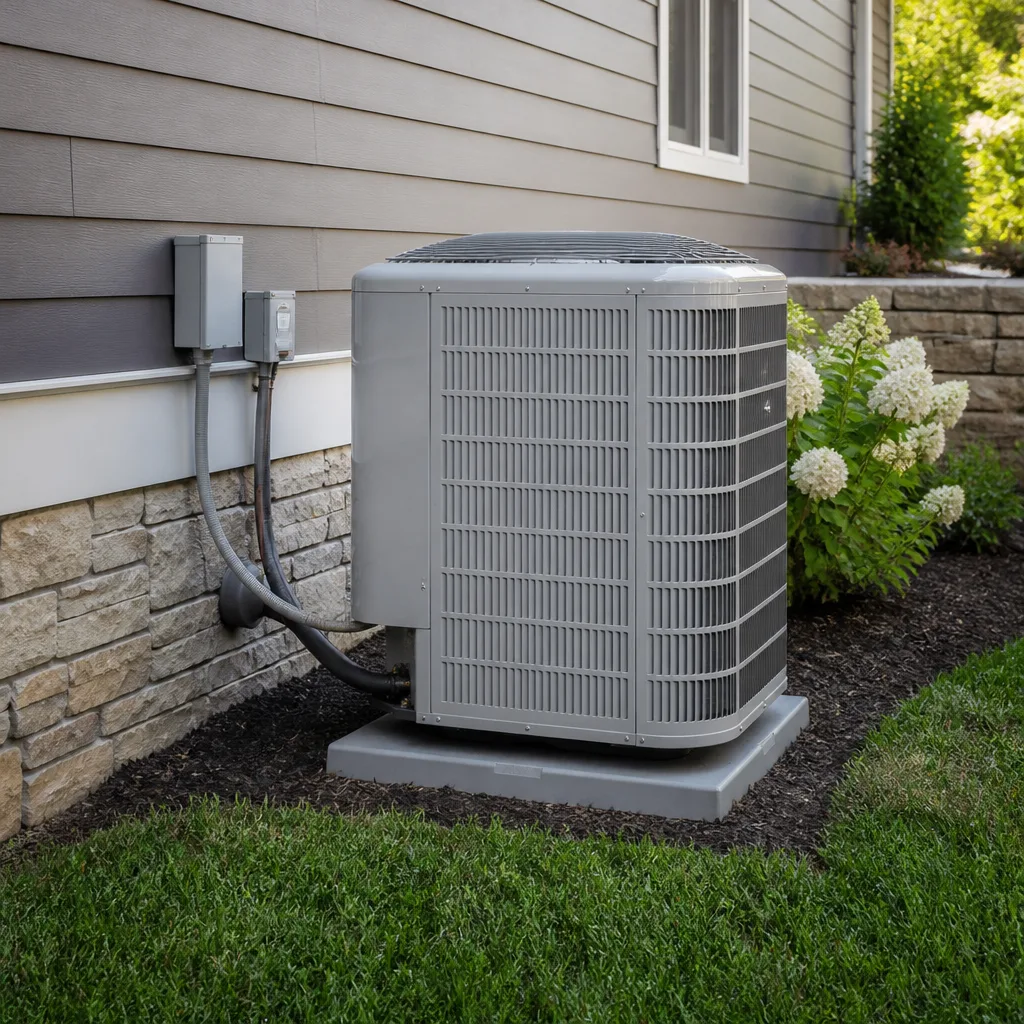 Carrier
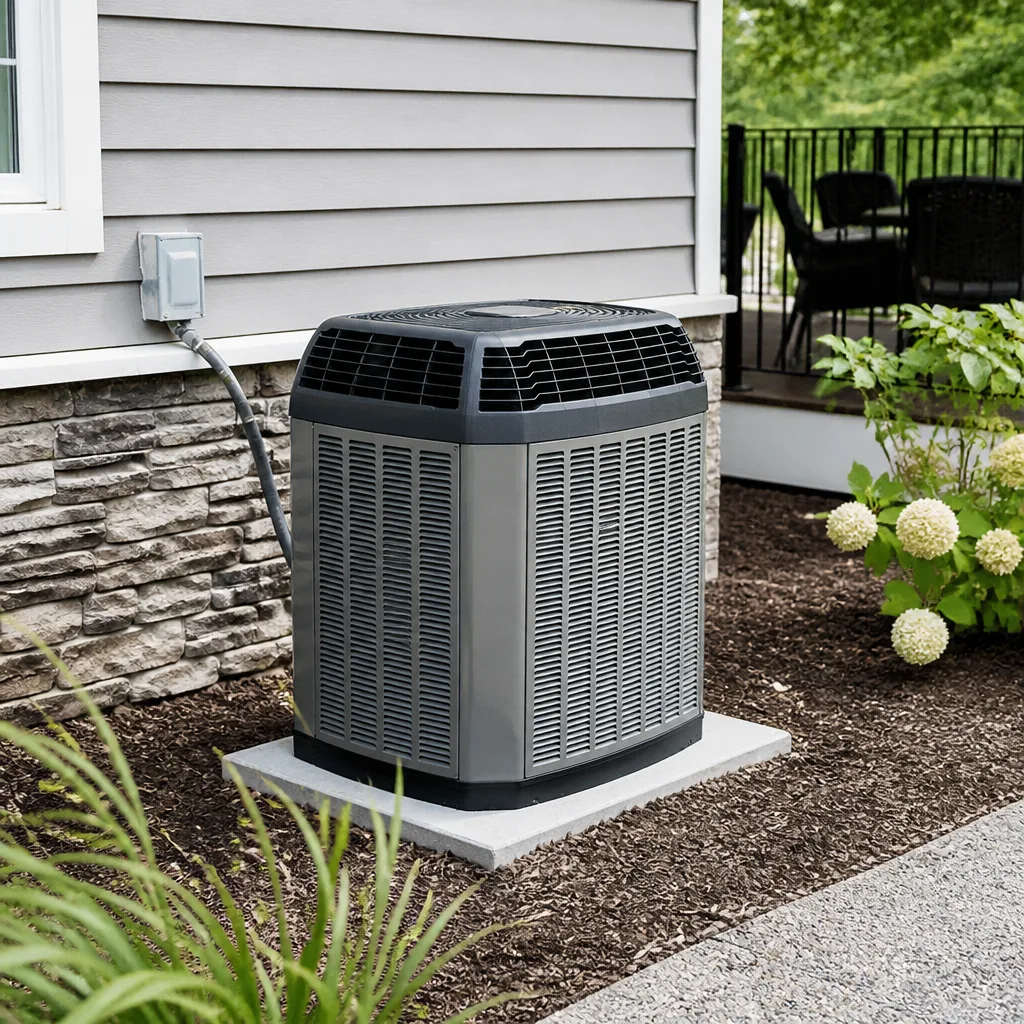 Trane
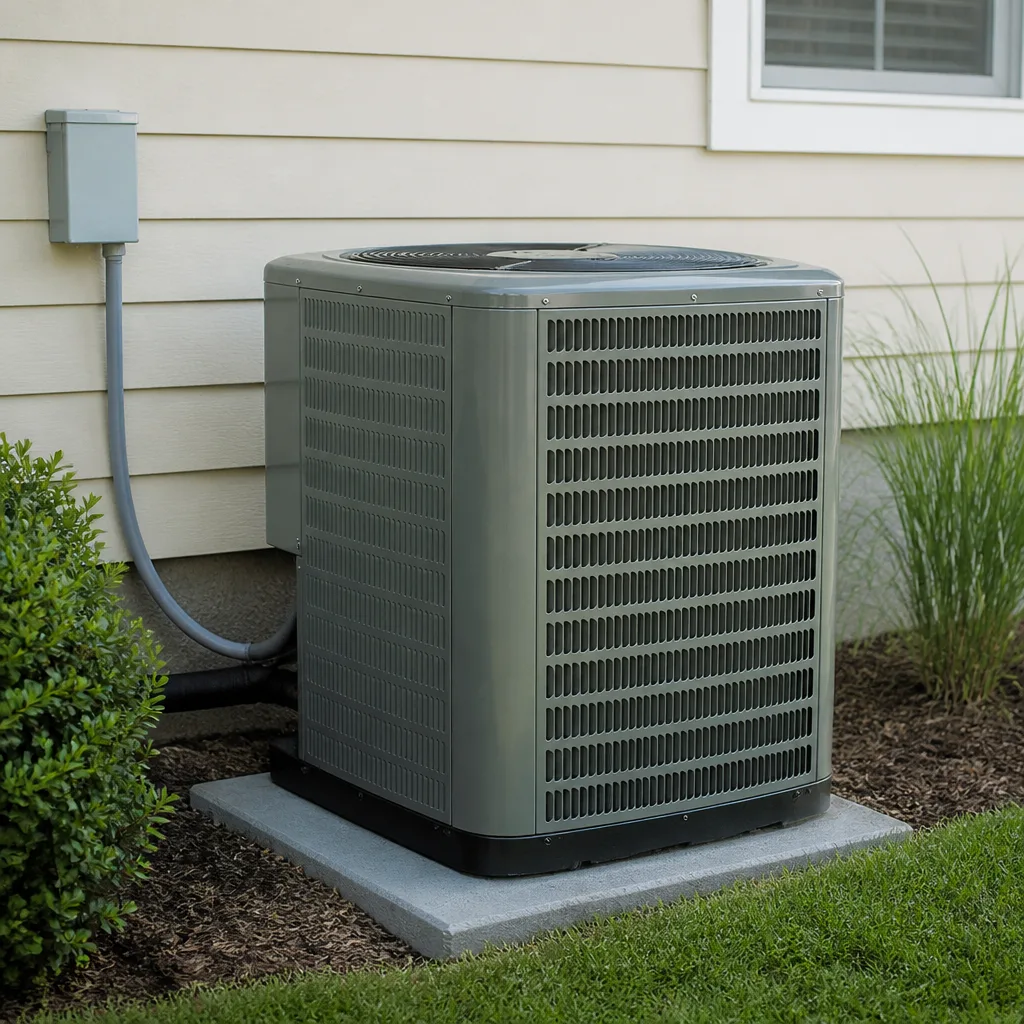 Goodman
Seasonal tune-up and full diagnostic on your Carrier, Trane, or Goodman system - readings shown to you before any repair is proposed
Diagnosis first, numbers second - you approve the repair price before a single part goes in.
Get your free estimateHVAC Emergency Preparedness Guide for Spring Valley Homes
Most homeowners treat an AC failure as a comfort problem. In Spring Valley it can become a heat problem fast, and the difference between those two things is usually decided before the system ever breaks. When an AC fails at 6 PM on a Friday in July in Spring Valley, indoor temperatures can reach 95°F by midnight in a single-story home with poor insulation. The decisions you make in the first hour determine whether this is a bad night or a dangerous one. This guide covers the 72-hour window around a failure: what to check, when to leave, how to slow the heat, and what to have documented so you’re not making hard calls in a hot house. You’ll also get a plain explanation of how emergency pricing actually works, so you can tell a fair service decision from a pressured one.
Quick Answer
If your AC fails in Spring Valley, check the thermostat, the indoor breaker, and the outdoor disconnect before calling anyone, then get the indoor temperature under control while you wait. If indoor temps climb toward the mid-80s or higher and anyone in the home is elderly, very young, pregnant, or on medication that affects heat tolerance, leave for a cooler place rather than waiting it out. Call (866) 773-7426 for AC Repair Spring Valley. We answer 24/7. Fast dispatch from 7am to 7pm, Sunday through Friday.
Styles & brands we work with
- AC repair
- Furnace & heating
- Heat pumps
- Ductless mini splits
- Carrier
- Trane
- Goodman
Table of Contents
- Why an HVAC Emergency in Spring Valley Is Different
- The First-Hour Triage Checklist
- Heat Safety: When to Shelter and When to Leave
- How to Slow Indoor Heat Gain While You Wait
- What to Document Before an Emergency
- How Emergency HVAC Pricing Works
- The Heating Side: Winter Failures in Spring Valley
- Warranty and Brand Considerations
Why an HVAC Emergency in Spring Valley Is Different
Spring Valley sits in the Las Vegas Valley, which means the summer design temperatures here aren’t a mild inconvenience to plan around. They’re the reason air conditioning is treated as life-safety equipment in local heat guidance rather than a luxury. A house that loses cooling in this climate doesn’t gently warm up; it can gain heat through the roof, the west-facing walls, and unshaded glass all afternoon and keep radiating it well into the night.
Housing stock complicates it. Much of Spring Valley was built in waves of tract development, which means common construction patterns you’ll recognize: single-story ranch plans with large west-facing windows, two-story homes where the upstairs bedrooms sit directly under an attic that can hit extreme temperatures, and garages that share a wall with a living space. Each layout fails differently. A two-story home often has upstairs rooms 8 to 12 degrees warmer than the ground floor even when the system is working. When it stops, that gap widens.
What makes this genuinely different from a furnace failure in a colder climate is the speed. You have hours, not days, before a hot house becomes a health concern for vulnerable people. That’s why we treat spring Valley cooling failures as time-sensitive in a way that a noisy condenser or a slightly weak airflow isn’t. A weak system is an appointment. A dead system in July is a priority.
One more local factor worth knowing: monsoon season. Late summer storms bring dust and debris that clog outdoor condenser coils, and power flickers that trip equipment. Many “emergencies” we hear about in spring Valley start with a storm that passed through the day before.
The First-Hour Triage Checklist
Before you call anyone, work through this list in order. It takes about ten minutes and it eliminates a surprising share of “failures” that are actually a tripped breaker or a thermostat set to the wrong mode.
- Confirm the thermostat is actually calling for cooling. Check the mode (cool, not fan or heat), the setpoint, and the batteries if it’s a battery model. A thermostat on “fan” will run the blower all day and never cool the house.
- Check the indoor breaker panel. Look for a tripped breaker on the air handler or furnace circuit. A breaker that’s tripped to the middle position isn’t off; it’s tripped. Reset it once and see if it holds.
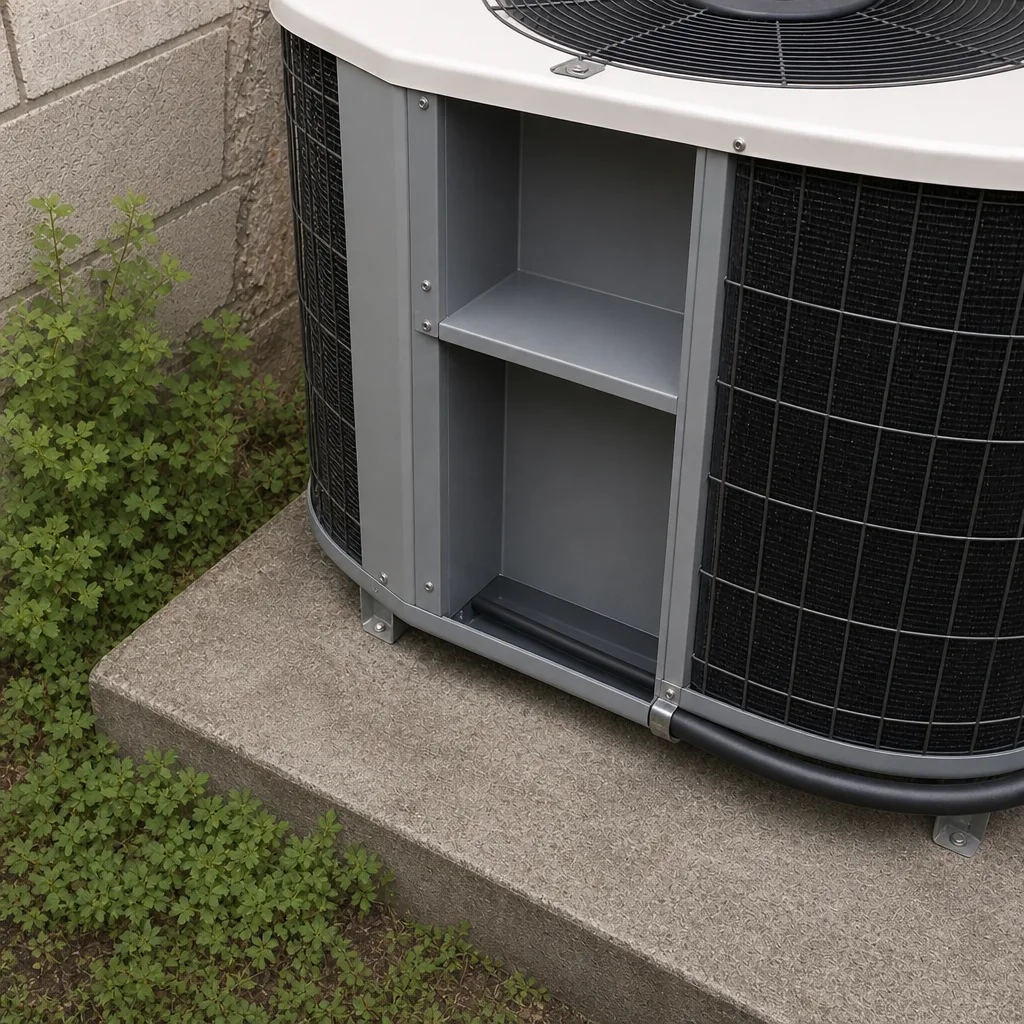
- Check the outdoor disconnect. Next to the condenser there’s usually a disconnect box or a breaker at the main panel labeled for the AC. If it’s tripped or the pull-out is loose, that’s your answer. Reset once.
- Look at the outdoor unit while it’s running. Is the fan spinning? Is the compressor making a hum or a click and stopping? That distinction matters to the technician.
- Check the air filter. A filter caked solid will starve airflow and can freeze the indoor coil. If it’s gray and matted, replace it before you do anything else.
- Look for ice on the indoor unit or the refrigerant lines. Ice means the system has been struggling or the coil is restricted. Turn the system off at the thermostat and don’t run it until a technician sees it.
- Note what you hear and see. A short written note (“compressor clicks and stops every 30 seconds,” “outdoor fan not spinning,” “breaker trips immediately on reset”) saves diagnostic time and gets you a faster, more accurate answer on the phone.
Stop at any point if you smell burning, see scorch marks or smoke, or hear a loud electrical buzzing. Those are not DIY checks. Turn the system off at the breaker and call for Spring Valley service. Electrical components and refrigerant circuits are not homeowner territory, and a system that’s arcing or tripping instantly on reset needs a trained technician, not another reset attempt.
Heat Safety: When to Shelter and When to Leave
This is the section to read before you need it. Local heat guidance for the Las Vegas Valley is built around a simple idea: heat illness is preventable, but only if you recognize the threshold and act before it’s crossed.
Who is at elevated risk
- Adults over 65, especially anyone living alone
- Infants and young children, who can’t regulate body temperature as efficiently
- Anyone pregnant
- People with heart or lung conditions, or on medications that impair sweating or temperature regulation
- Anyone who is significantly overweight or dehydrated
- Pets, particularly flat-faced breeds and animals kept outdoors
When to shelter in place
If the indoor temperature is holding in the low 80s and everyone in the home is healthy, you can typically shelter for a few hours while you arrange service. Close up the house, run fans, keep people on the lowest floor, and keep everyone drinking water. Watch for headache, dizziness, nausea, or confusion in anyone; those are signs to stop sheltering.
When to leave
Leave the house for a cooler place if indoor temperatures reach the mid-80s or above, if anyone in the household is on the elevated-risk list, or if the failure happens during an active extreme heat event when overnight temperatures don’t drop much. A public library, a shopping center, a friend’s home, or a cooling center all work. The point of leaving isn’t to abandon your house; it’s to keep vulnerable people out of a climbing temperature while a technician is scheduled. In Spring Valley, cooling centers are announced during heat events and are usually open through the hottest part of the day.
Homes without working AC during an excessive heat event should never be treated as livable for vulnerable people overnight. Bedrooms upstairs in a two-story home are the first place heat becomes unsafe, because that’s where heat accumulates.
How to Slow Indoor Heat Gain While You Wait
You can’t cool the house without the system, but you can slow how fast it gains heat. These steps buy hours.
- Close every window and exterior door. An open window on a 108°F day lets in more heat than it releases.
- Pull the blinds and drapes on sun-facing glass. West windows in the afternoon and south windows at midday are the biggest culprits. Close curtains, or hang a light-colored sheet over any unshaded window.
- Close interior doors to unused rooms. Cool the rooms people are actually in. In a two-story home, spend the daytime downstairs and move sleeping arrangements to the ground floor or coolest room.
- Run box fans to move air, not to cool it. Fans don’t lower air temperature; they increase airflow across your skin. Point them so air moves through the room, and put a fan in a window at night if the outside air is cooler than inside.
- Use the exhaust fan when you cook, or don’t cook. Turn on the kitchen exhaust when you boil water, and use the bathroom exhaust when you shower. This pulls hot, moist air out of the house.
- Cut heat sources. Turn off incandescent bulbs and unused electronics, avoid running the oven, and postpone laundry until after the system is running again.
- Prioritize one room. In a single-story home, the room with the fewest exterior walls is usually the coolest. Bring water, food, and pets there and stay there instead of trying to cool the whole house.
If you have a portable or window unit, run it in the room where people are sleeping and keep that room’s door closed. Don’t try to cool an entire spring Valley house with one portable unit; cool one space well.
What to Document Before an Emergency
The single best thing you can do this week is put a page of HVAC information in one place: taped to the inside of a closet door, in a folder by the thermostat, or as a photo on your phone. When the system dies at 6 PM, you won’t be looking up serial numbers in a dark garage.
Record the following (the “printable location” part is simple: a single sheet of paper in a fixed spot, plus a phone photo of that sheet):
- Equipment model and serial number for the condenser and the indoor unit. These are on a nameplate on each unit. Photograph them directly.
- System type and age. Note the brand and the year it was installed, if you know it. This frames the repair-or-replace conversation before we arrive.
- Service history. Past repairs, refrigerant work, and any recurring issues. If the same part has failed twice, that’s important information.
- Warranty contacts. The manufacturer and any extended warranty administrator, plus the installer’s name if known.
- Filter size. This is the number homeowners forget most, and it’s the one you need most.
- The emergency phone line of your HVAC company, written on the sheet. Not just saved in a phone that may be low on battery.
While you’re at it, note the location of your breaker panel and mark the AC breakers with tape and a label. During a hot house, feeling around an unlabeled panel is the last thing you want to do.
How Emergency HVAC Pricing Works
Here’s where skepticism is healthy. The legitimate version of an emergency HVAC price is a written estimate that reflects the actual work, prepared after diagnosis, with the final price set by that document. Prices are set per job, not by a flat emergency surcharge. What you should insist on is this:
- A written estimate before work begins. A verbal number in a hot house is not a price. Ask for the number in writing and read it.
- Diagnosis first. A company that quotes a repair over the phone without seeing the equipment is guessing. On a spring Valley summer afternoon, that guess can be expensive.
- The correct part, not the fastest part. A competent technician will tell you when a part can be ordered for less and when it can’t wait. That’s an honest trade, not a sales tactic.
- No pressure to replace the whole system during a failure. If the issue is a capacitor or a contactor, you need that part, not a new condenser. A replacement conversation happens after the system is stable and the numbers make sense.
We disclose the estimate up front and write the final price per job. What we won’t do is push a system replacement because the house is hot and you’re motivated. Our technicians diagnose and recommend based on system condition and your budget, which is a different thing from a quota. If you want to know the price before we start, ask for the written estimate and split the work into what’s urgent and what can wait.
For AC installation decisions that come out of a failure, ask for the full-system quote separately and compare it against the repair cost. A system at the end of its service life is worth replacing on a planned basis, not in a 100°F scramble.
The Heating Side: Winter Failures in Spring Valley
Spring Valley winters are mild compared to the Midwest, but a furnace failure on a 32°F night is a real problem here. A cold snap that pushes overnight temperatures to the freezing mark with a dead furnace puts pipes and people at risk.
The triage sequence mirrors the cooling side: check the thermostat, check the indoor breaker, confirm the gas valve is on, and look at the filter. If you smell gas at any point, leave the house and call your gas utility from outside before you call anyone else. Never investigate a gas smell with a lighter or a match; that sounds obvious until you’re cold and desperate.
For a no-heat situation with a working thermostat and a good filter, don’t keep resetting the system and hoping. Furnace failures often involve the ignition system or the control board, and repeated reset attempts can flood the combustion area or trip safety switches. That’s the point to call for furnace repair rather than troubleshoot further.
One thing we do see in spring Valley that surprises people: two-story homes with a heating problem upstairs only. That’s usually airflow, not a dead furnace. It’s worth an honest diagnosis before anyone starts talking about replacement.
Warranty and Brand Considerations
Knowing your brand matters more during an emergency than at any other time, because part availability and how a manufacturer handles warranty claims influence how fast a repair happens. We work on equipment from Carrier, Trane, Lennox, Goodman, Rheem, York, Daikin, Bryant, and American Standard, which covers most of what’s running in Spring Valley homes. We’re not tied to one manufacturer, so the recommendation is based on what your system actually needs.
Before you call for service, check two things on your documentation sheet: whether the unit is still under a parts warranty, and whether the installing contractor is the name on that paperwork. Many manufacturer warranties cover parts but not labor, and coverage rules vary by brand. Bring your model and serial numbers to the call and we can help you sort out what’s covered.
This matters most at the repair-or-replace line. A Goodman system at 15 years old and a Trane system at 15 years old get the same honest evaluation: if a major component fails and the rest of the system is near the end of its service life, replacement may be the better move. If the repair is straightforward, we’ll say so.
Common Mistakes to Avoid
- Resetting a tripped breaker repeatedly. One reset is fine. A breaker that trips again immediately is telling you there’s a fault, and repeated resets risk damage. Stop and call.
- Opening windows “to let the heat out” during the day. On a 108°F spring Valley afternoon, that lets far more heat in than it releases. Keep the house sealed until the outside air is cooler than the inside.
- Running the system with ice on the indoor unit. Ice almost always means low refrigerant or restricted airflow, and running it makes both worse. Shut the thermostat off until a technician arrives.
- Hiring the first person who answers without asking for a written estimate. In an emergency the pressure to say yes is real. A written estimate takes five minutes and protects you.
- Assuming the upstairs temperature gap is “just how the house is.” That gap usually means a duct or airflow issue that a proper diagnosis can fix. It isn’t inevitable.
- Waiting until failure to find the serial number. The model and serial plate on an older outdoor unit is often faded or painted over. Photograph it this week while it’s legible.
- Letting the filter go past the point of restriction. A matted filter is the single most common preventable cause of frozen coils and premature failures in this climate.
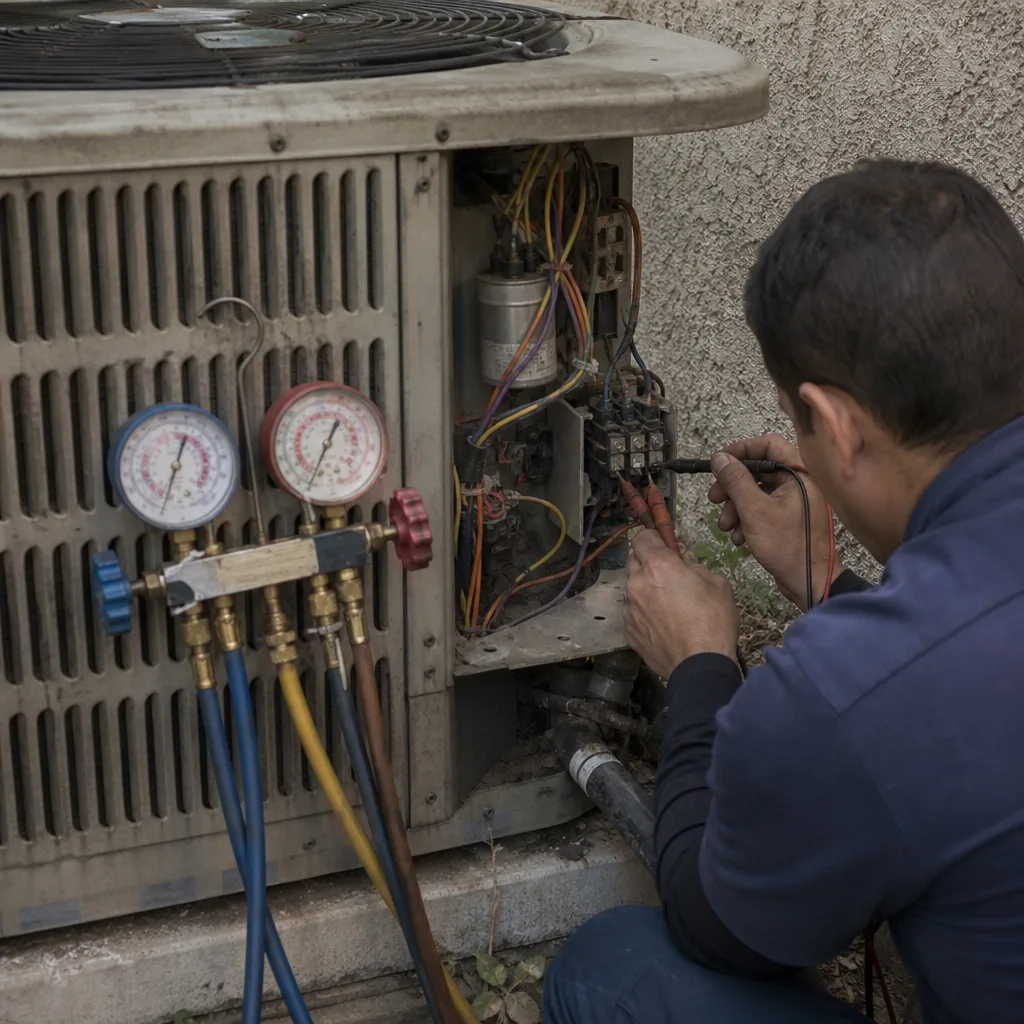
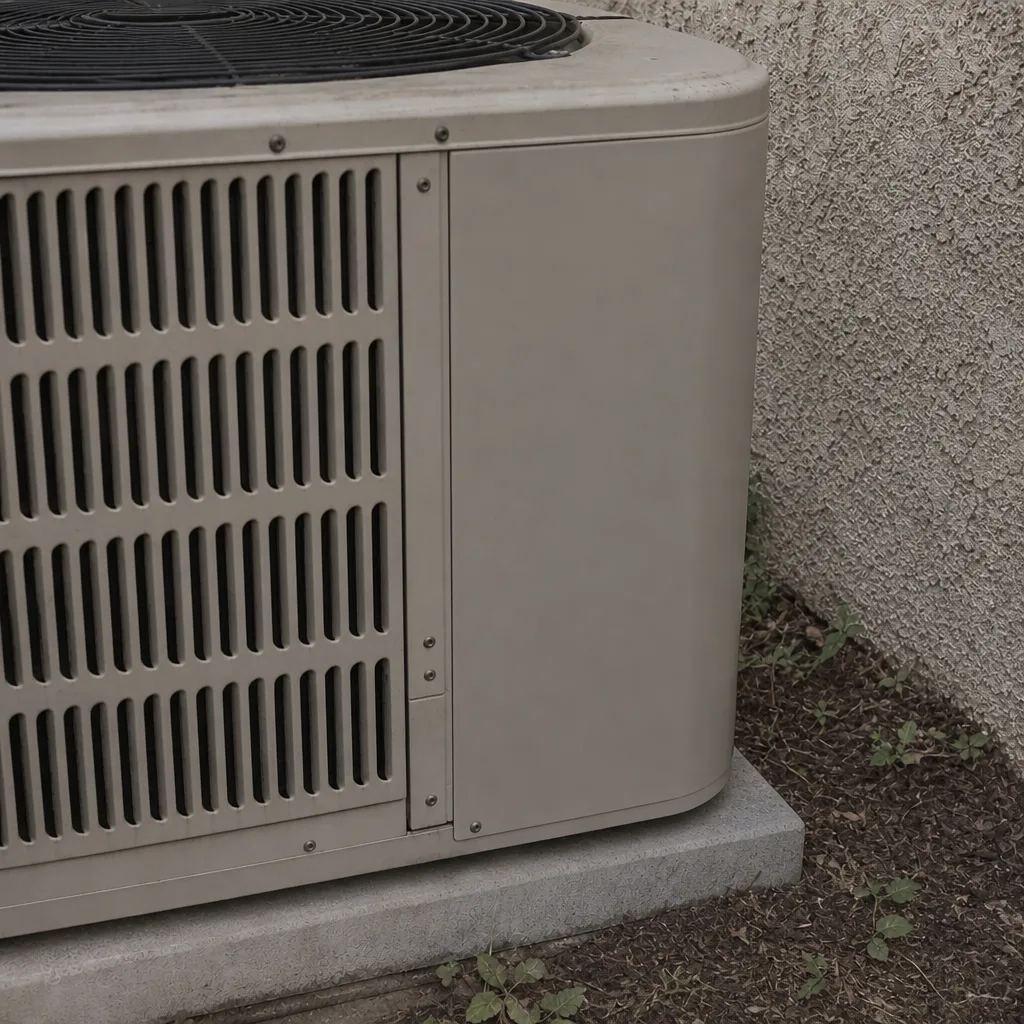
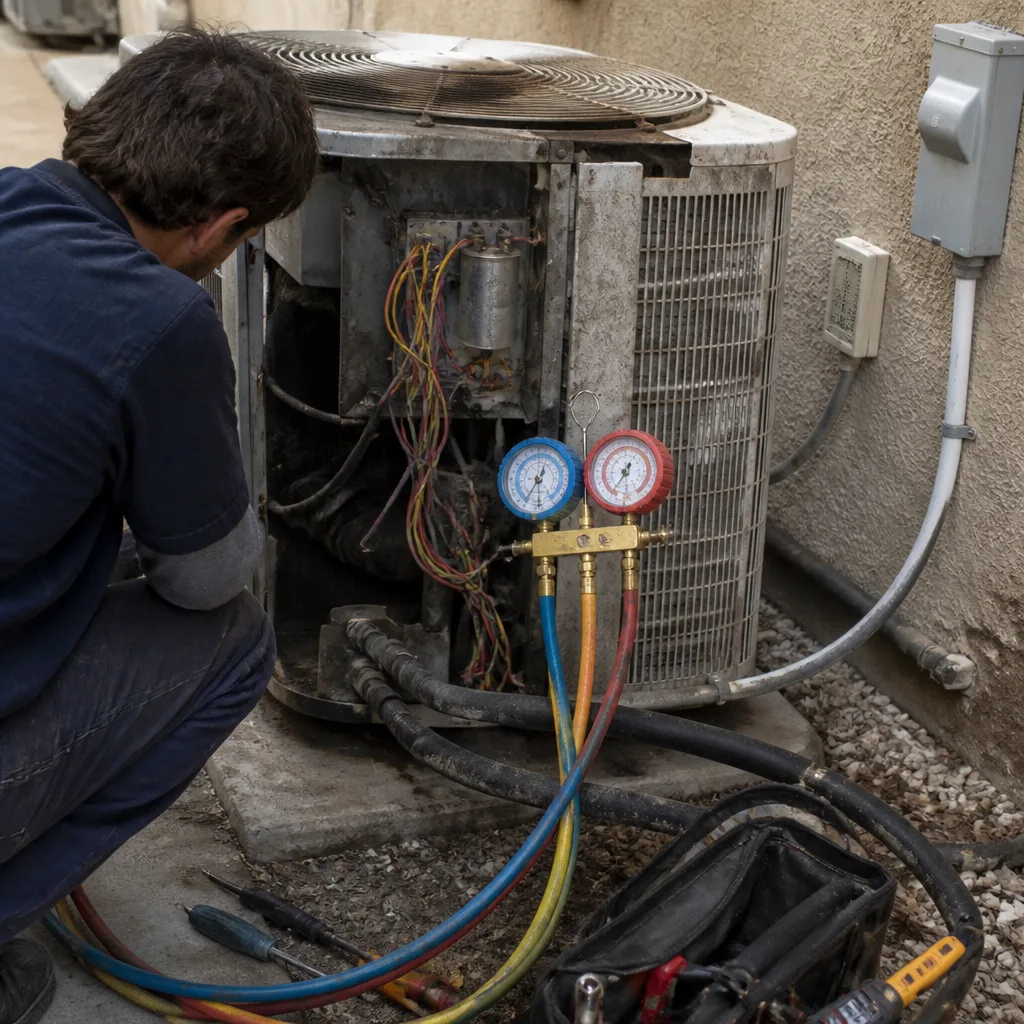
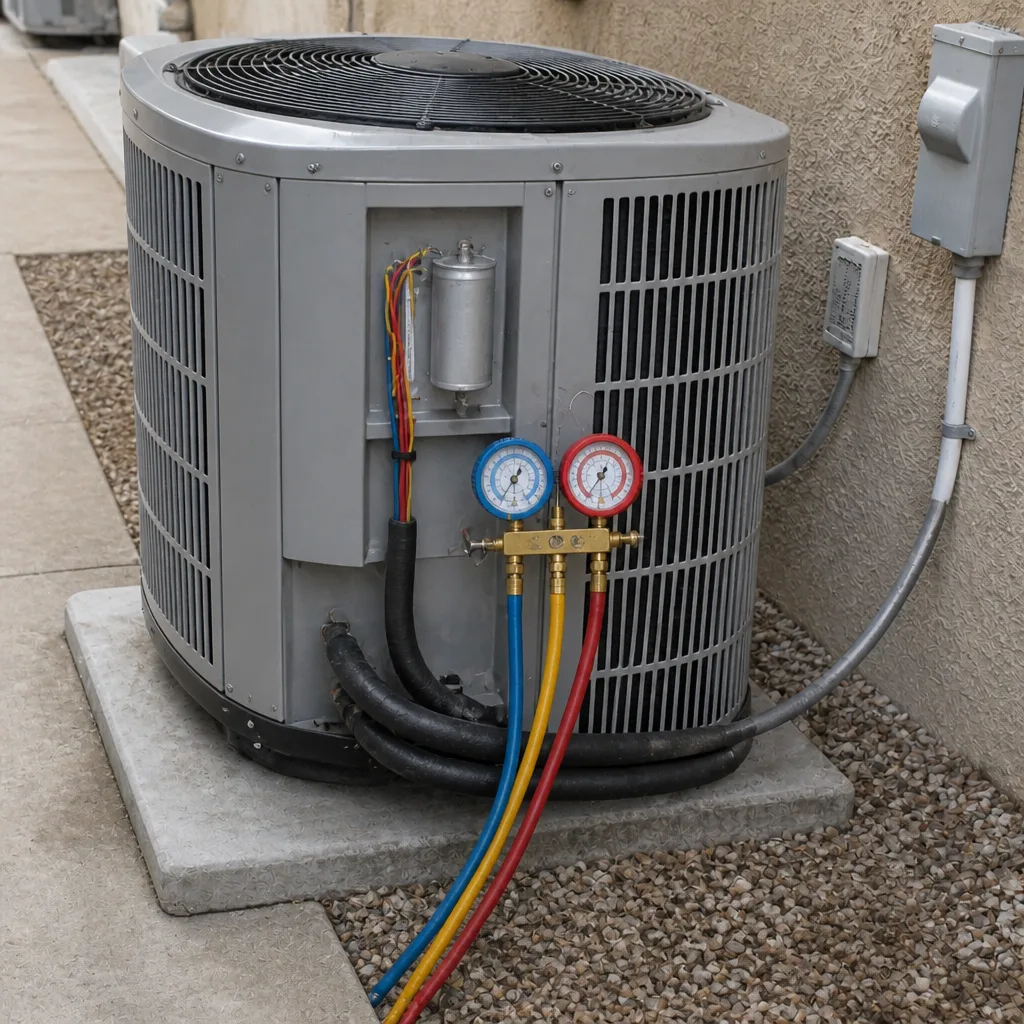
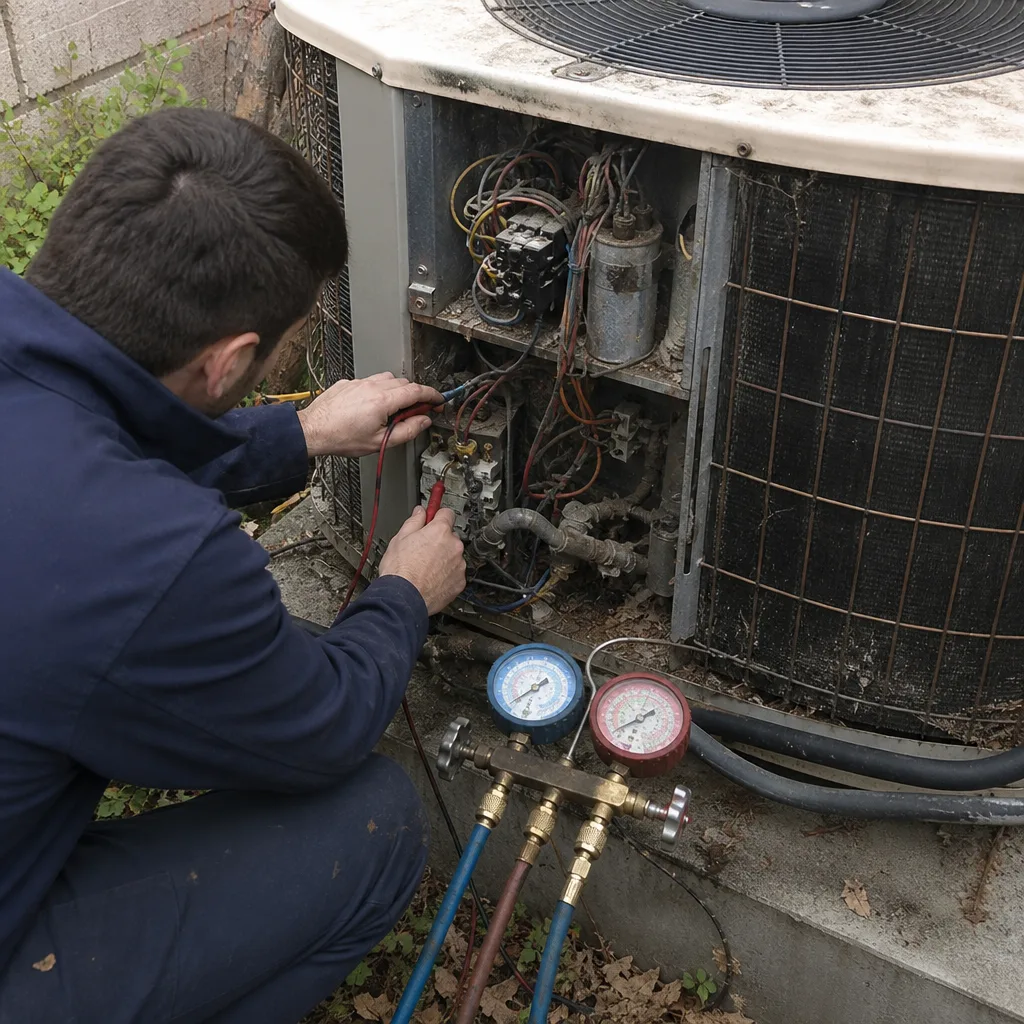
See the difference
 Before
 After
 Before
 After
 Before
 After
When to Call a Professional
Call a professional whenever the failure involves electrical faults, refrigerant lines, gas, or a system that trips a breaker on reset. Call when there’s smoke, a burning smell, or ice on the indoor unit. Call when the house is climbing toward unsafe temperatures and vulnerable people are inside. And call when you’ve done the simple triage steps and nothing has changed; the diagnosis needs a technician at that point. AC Repair Spring Valley offers free estimates in Spring Valley. Call (866) 773-7426. We answer 24/7. Fast dispatch from 7am to 7pm, Sunday through Friday. We work on your brand, we’ll tell you what it actually needs, and our technicians have up to 8 years of experience.
Frequently Asked Questions
Check the thermostat mode, then the indoor breaker, then the outdoor disconnect before you call. Ten minutes of triage eliminates a lot of false alarms. If the system trips a breaker again after one reset, or you smell burning, stop and call a technician. Call (866) 773-7426 for an exact quote, and estimates are free.
Indoor temperatures can climb into the 90s within a few hours in a single-story home with poor insulation during a summer heat event, and upstairs rooms in a two-story home run hotter still. The actual rise depends on insulation, sun exposure, and window area. Leave the house once the indoor temperature approaches the mid-80s, especially if anyone inside is elderly, young, or on heat-sensitive medication.
Fans help when the air is moving across your skin, but they don’t lower the indoor air temperature. Use them to circulate air and move it through the room, and don’t rely on a fan alone in a room that’s heating up. Keeping the house sealed and the blinds closed matters more.
Same-day service is usually available for failures that leave a home without cooling. Call (866) 773-7426 and we’ll give you the next available window. Estimates are free, and the price is set in writing before the work starts. Most repairs can be handled on the first visit.
Replace when the system is near the end of its service life and the repair is a major component; repair when the failure is a single straightforward part and the rest of the system is sound. The right call depends on system age, brand, and history, not on how hot the house is at that moment. Call for a written estimate and an honest read on which option makes sense.
Have your system model and serial numbers, the age of the system, and a short description of what you’ve already checked handy. Mention anything you heard or saw, like a clicking compressor or an outdoor fan that isn’t spinning. Call (866) 773-7426 for an exact quote, and we’ll tell you what it actually needs.
The Bottom Line
The homeowners who handle a spring Valley HVAC failure well are the ones who prepared. Check the thermostat, the breakers, and the filter fast. Seal the house, run fans for air movement rather than cooling, and be willing to move vulnerable people to a cooler place once indoor temperatures reach the mid-80s. Keep your model and serial numbers, service history, and filter size on a single sheet where you can find them. Ask for a written estimate before any work begins, and don’t let a hot house push you into a decision you wouldn’t make at room temperature. A little preparation this week turns a scary night into a manageable one.
Written by the team at AC Repair Spring Valley.